By Liyipackaging Packaging Team | Published and last updated: October 23, 2026
Food tin containers are tinplate packaging made for dry foods, confectionery and gift products. A tin that looks right is not automatically right for food. The interior coating, the type of food and the way it is packed all decide whether a container is suitable.
This guide covers what is common to every food tin project: the material, the interior coating, direct contact versus inner packaging, US and EU food-contact points, and the documents to ask for. Size, lid and artwork details for specific foods are covered in our product-specific guides, linked below.
Quick Takeaway
Start with the food, not the tin. Decide whether it touches the metal, then check the interior coating and the documents that support your target market. Size, lid and printing come after that. A tin is not automatically airtight or moisture-proof because it has a lid, so products that need a barrier should be evaluated together with their inner pouch or liner.
Which Foods Are Packed in Tin Containers?
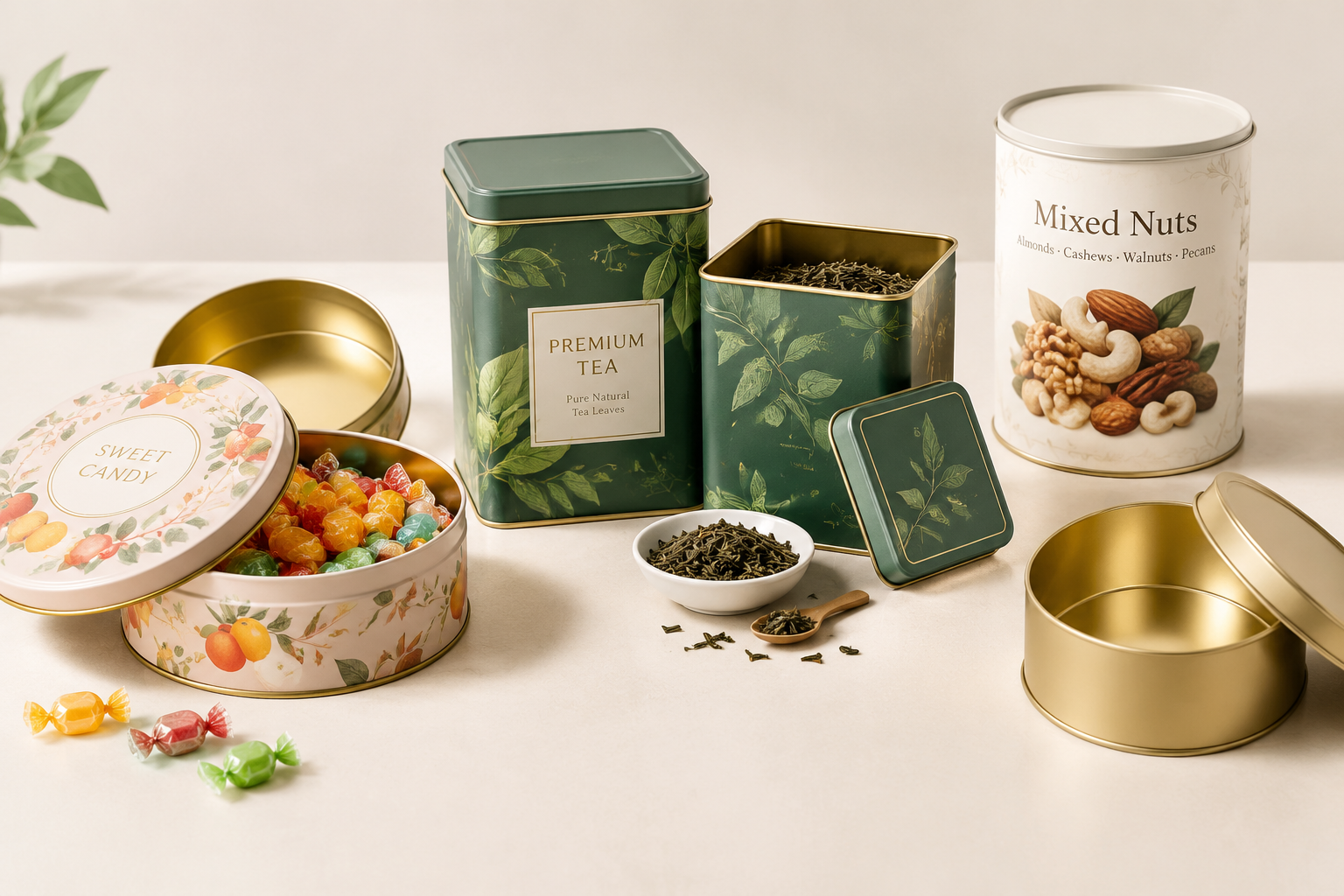
Tin containers are most often used for dry and low-moisture foods, gift assortments and seasonal products. Each food raises a different question, and each question has its own detailed guide.
| Food | Main packaging question | Detailed guide |
|---|---|---|
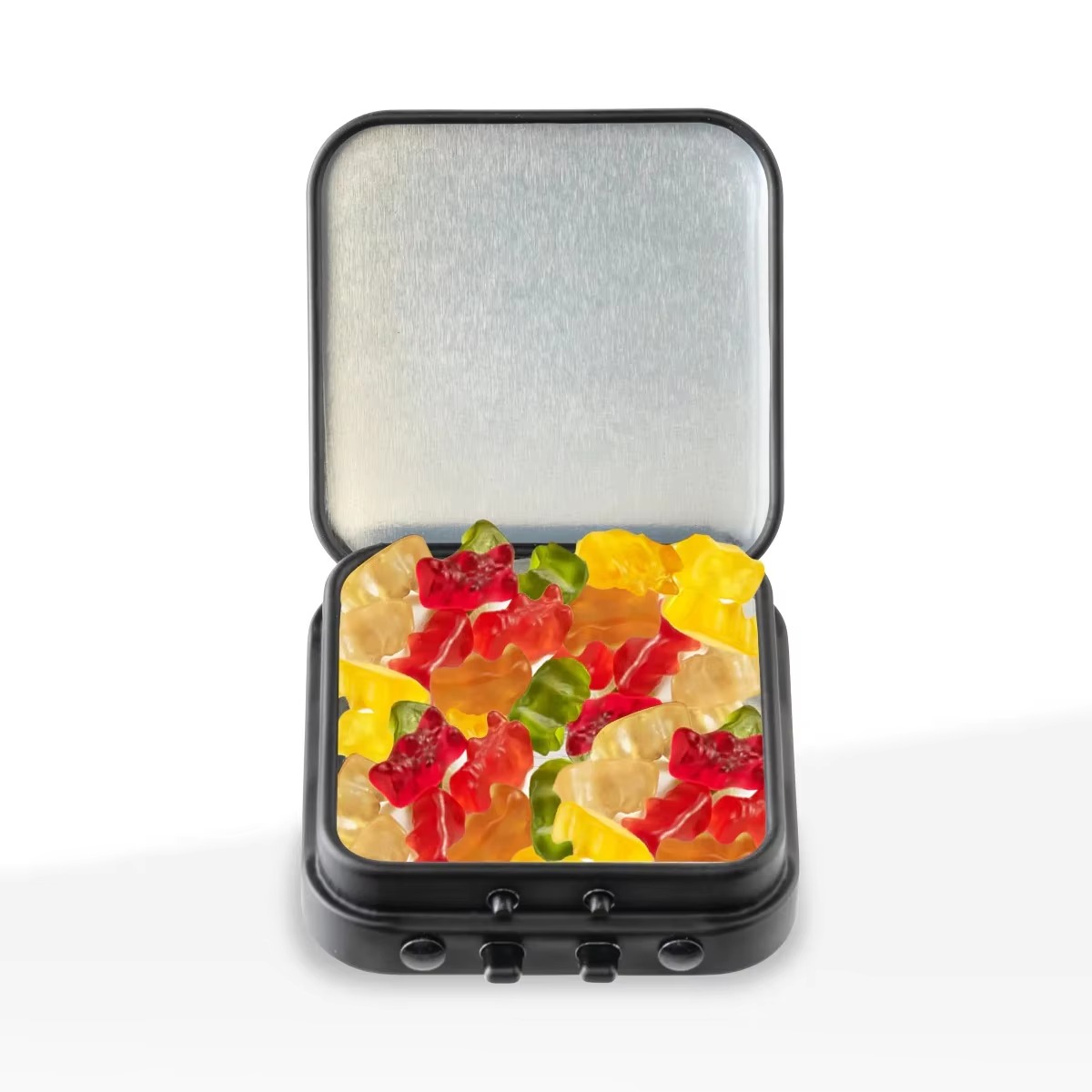
| Candy | Wrapped or loose pieces, space for wrappers | custom candy tins |
| Mints | Piece count, layers, coating and aroma | custom mint tins |
| Fudge | Layering and separation of pieces | custom fudge tins |
| Cookies | Packing layout, crumbs, butter and oil | round cookie tins |
| Cakes | Moisture, oil, inserts and lining | custom cake tins with lids |
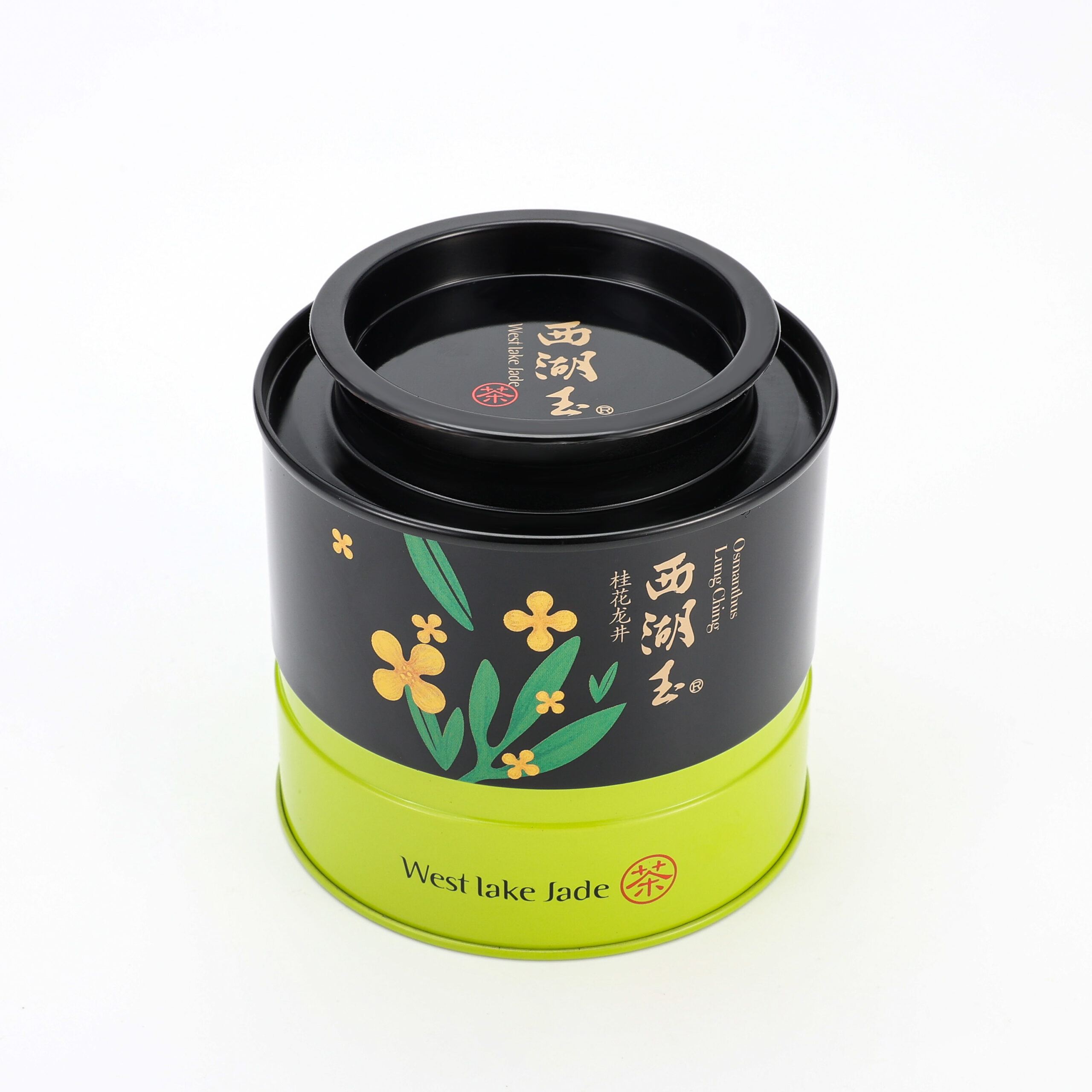
| Tea | Aroma protection and inner pouch fit | custom tea tins |
| Coffee | Inner bag, aroma and lid fit | custom coffee tins |
| Popcorn | Filled volume, oil and inner bag | custom popcorn tins |
| Nuts and gift assortments | Net weight and inner pack | custom nut gift tins |
| Holiday products | Stock or custom, seasonal timing | Christmas tins |
What Are Food Tin Containers Made Of?
Most food tin containers are made from tinplate. Tinplate is steel coated with a thin layer of tin to protect it from corrosion. Liyipackaging’s published FAQ states that the inside of its tins can be coated with food-grade lacquer, so the food does not touch the tin layer directly.
That coating is the part buyers most often overlook. Two tins with the same outside appearance can have different interior coatings, and the right one depends on what goes inside.
Why Does the Interior Coating Matter?
The coating sits between the food and the metal, so it is part of the food-contact specification. Some foods place more demand on it than others:
- Foods with free oil or fat, such as butter cookies or cake
- Moist or refrigerated products
- Acidic or salty foods
- Products that are stored for a long time
If your product falls into one of these groups, say so when you request a quotation. “Food grade” on its own does not describe the food, the storage conditions or the target market.
Should the Food Touch the Metal, or Sit Inside a Pouch?
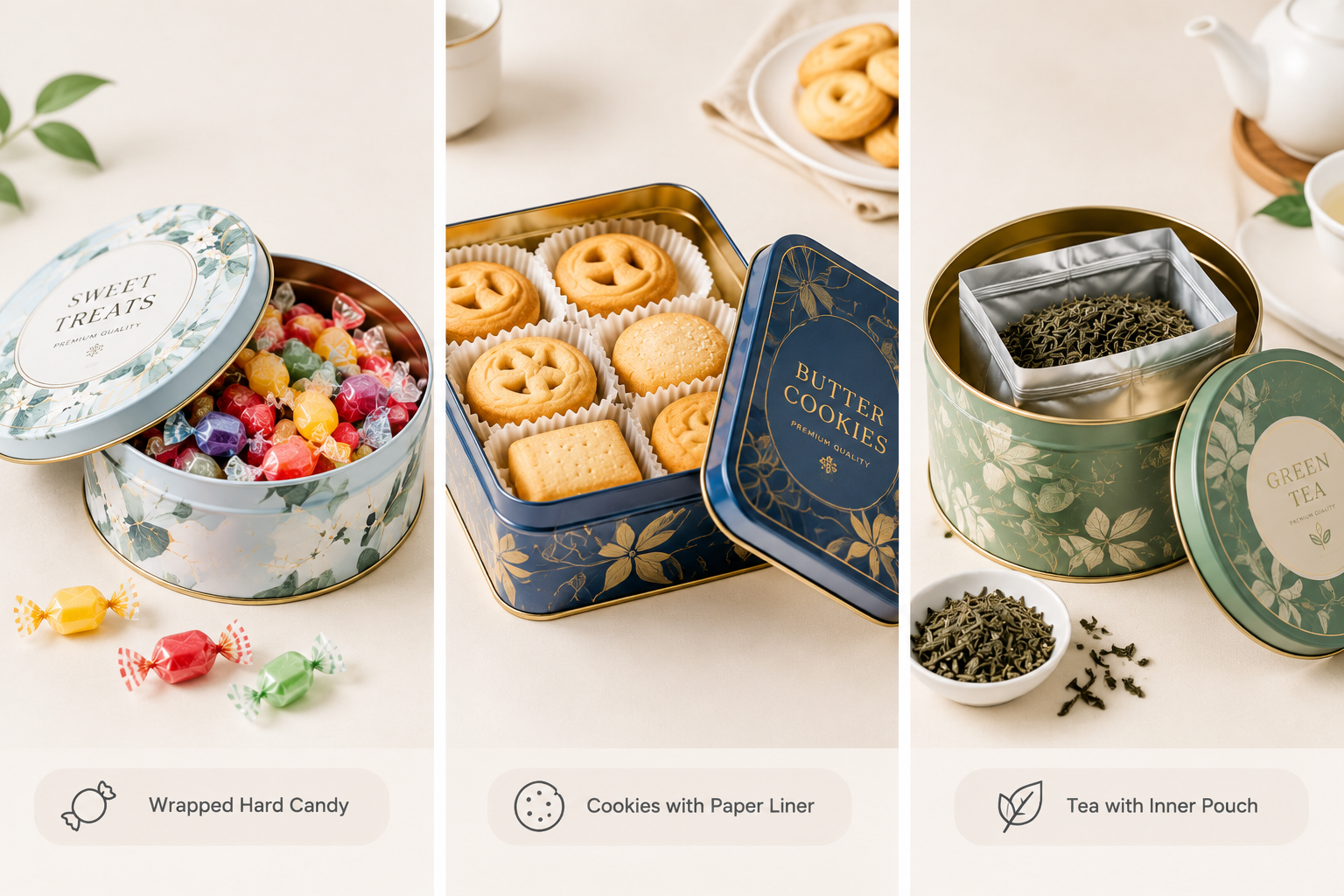
Use the packing method to decide how much the tin itself needs to do. Three common products show the difference:
- Individually wrapped hard candy: the wrapper already separates the candy from the coating, so the tin mainly provides structure and presentation.
- Butter cookies on a paper liner: the liner and the interior coating both matter because of the surface fat.
- Loose-leaf tea: an inner pouch is usually the better way to protect aroma, with the tin providing the branded outer container.
The same decision applies to coffee, popcorn and nuts, which is why those guides focus on the inner bag. Wherever a pouch or liner is used, confirm that component is suitable for food contact as well.
What Food-Contact Requirements Apply?
Requirements depend on the market where the finished product will be sold, and they apply to the actual materials used, not to a tin type in general. The points below are an overview, not a substitute for your own regulatory review.
United States
FDA explains that the status of a food-contact material depends on the individual substances in the finished article and its intended conditions of use. For a tin, that means the supplier should be able to identify the interior coating and confirm it for your food type and storage conditions.
European Union
Regulation (EC) No 1935/2004 sets the general framework for materials that contact food, and Regulation (EC) No 2023/2006 covers good manufacturing practice. For metal packaging, Regulation (EU) 2024/3190 is especially important because it prohibits BPA in covered food-contact materials, including coatings and varnishes.
The main transition period for most single-use articles ended on July 20, 2026. A longer transition applies to certain articles where a BPA-based coating is used only on the exterior metal surface. The transitional provisions were later clarified by Regulation (EU) 2026/250, so buyers should confirm the current position for their product before approving production.
Regulatory information reviewed: October 22, 2026.
What Documents Should You Request?
Ask the supplier which of these are available for your project:
- Material and interior coating specification
- Declaration of compliance for your target market
- Relevant test reports
- Confirmation of whether the coating is formulated without BPA, if you sell in the EU
- Documentation for any inner pouch, liner or insert
Where compliance is critical, your regulatory or quality team should approve the documents before production.
Where Are Size, Lid and Printing Covered?
Once the food and its contact conditions are clear, the remaining choices have their own guides:
- Shape and lid structure: see rectangular tins with lids and the lift-off, slip and hinged lid guide.
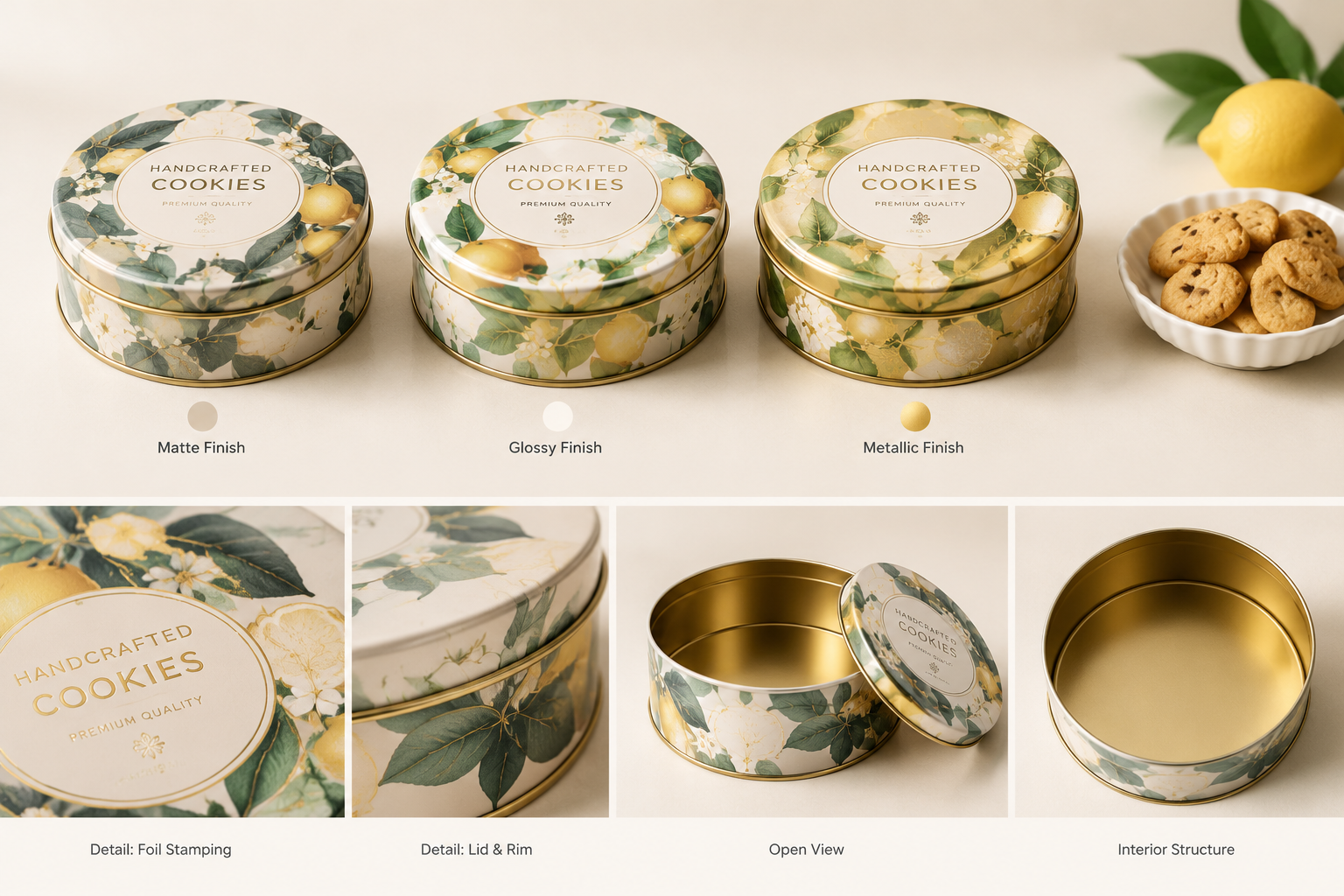
- Artwork, colors and finishes: see our guide to custom printed tin packaging.
- Price, MOQ and timing: see the custom tin box cost, MOQ and lead time guide.
- Ready-made structures: browse the round, rectangular and square tin ranges.
What Should You Check in a Food Tin Sample?
A food sample should test more than appearance. Fill it with the actual product, including any pouch, liner or insert, and check:
- The interior coating is even, with no visible scratches or damage
- Rims and seams are smooth and safe to handle
- The lid closes without pressing on the food
- There is no unwanted odor when the lid is opened, especially for tea, coffee and other aroma-sensitive foods
- The package behaves as expected under your intended storage conditions
What Should You Send Before Requesting a Quote?
Send the details that affect food-contact suitability first:
☐ Food type and whether it touches the metal directly
☐ Fat, moisture or acidity level of the food
☐ Inner pouch, liner or insert, if used
☐ Target market, such as the US or the EU
☐ Documents you need to receive
☐ Approximate size, quantity per tin and order quantity
☐ Artwork and finish preferences
For planning, Liyipackaging’s published FAQ lists stock items from about 100–200 pcs and customized products typically from 3,000 to 10,000 pcs, depending on structure and printing complexity. It lists customized samples at about 5–15 days, new mold and sample at about 20–25 days, and custom printed production at about 25–30 days. These are planning references, so confirm them for your project.
FAQ
What foods can be packed in food tin containers?
Tin containers are commonly used for dry foods such as candy, mints, cookies, tea, coffee, popcorn and nuts. Suitability depends on the interior coating, the food’s fat and moisture content, and whether an inner pouch is used.
Are food tin containers safe for direct food contact?
Tinplate containers can be produced with a food-grade interior lacquer for food packaging. Whether a specific tin is suitable depends on the food, the coating, the conditions of use and the target market, so request supporting documents for your project.
Do food tin containers need an inner bag or liner?
Not always. A wrapped candy may not need one, while tea, coffee and popcorn commonly use an inner pouch or bag to protect aroma and freshness. Wherever one is used, it should also be suitable for food contact.
Are food tin containers airtight?
A lid alone does not make a tin airtight or moisture-proof. If shelf life depends on a barrier, evaluate the tin, the lid and the inner packaging together.
What is the MOQ for custom food tin containers?
Liyipackaging’s published FAQ states that customized products typically range from 3,000 to 10,000 pcs, depending on structure and printing complexity. Stock items start from about 100–200 pcs. See the cost, MOQ and lead time guide for details.
How long does it take to get a food tin sample?
The FAQ lists customized samples at about 5–15 days, and about 20–25 days when a new mold is needed. Timing depends on the artwork and the structure.
Plan Your Food Tin Project
If you know your food type, target market and estimated quantity, our team can help review the structure, interior coating, documents and sampling plan. See our custom tin container solutions or request a quote for your food tin project.