By Liyipackaging Packaging Team | Published and updated: October 15, 2026 | Regulatory information reviewed: October 15, 2026
Quick takeaway: Size a coffee tin by the filled inner bag, not by the coffee weight. Measure the bag after it is filled and sealed, add clearance for insertion, and confirm the fit with a physical sample before mass production.
Dongguan Liyi Packaging Products Co., Ltd. (Liyipackaging) produces custom metal packaging for food, gift, and retail products. This guide covers the decisions that are specific to coffee: how the coffee is packed inside the tin, how to size the tin, which lid suits the product, and what to confirm before ordering. Printing, pricing, and general lid structures are covered in separate guides, linked where relevant.
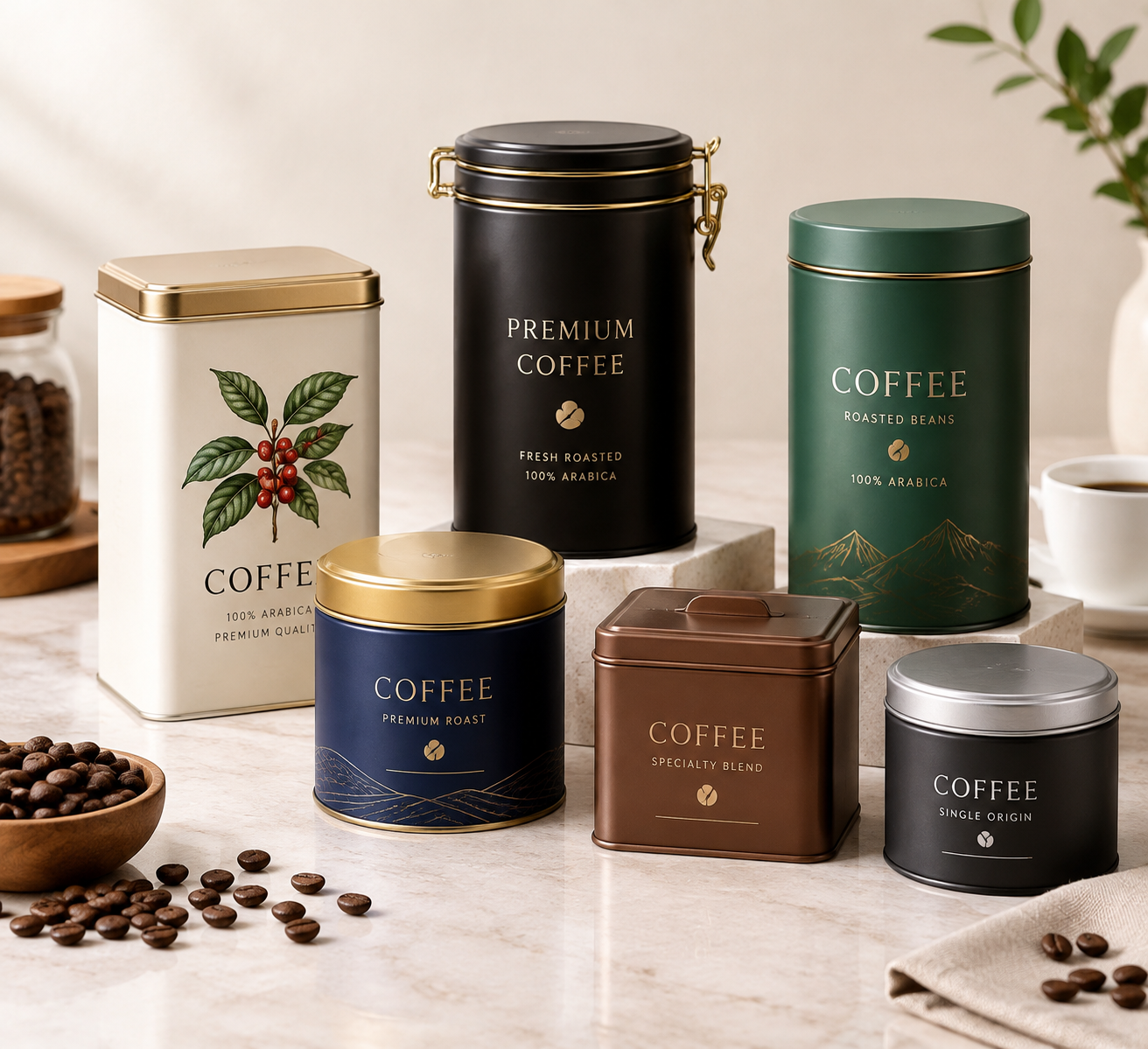
What Coffee Products Are Packed in Coffee Tins?
Coffee tins are commonly used for roasted whole beans, ground coffee, and coffee gift sets that combine coffee with accessories. Each format behaves differently inside a tin:
- Whole beans: Larger, looser volume. Freshly roasted beans release carbon dioxide, which matters for how they are sealed (see below).
- Ground coffee: Denser fill, but more sensitive to moisture and aroma loss once exposed to air.
- Gift sets: Coffee plus items such as a scoop, filters, or a mug, which usually need a larger tin or an insert. For sizing gift tins in general, see our gift tin box size guide.
- Seasonal collections: Smaller tins sold as sets. For holiday planning, see our Christmas tins guide.
Two products with the same weight can need different tin sizes, because volume depends on the grind, the roast, and how the coffee is packed.
Should Coffee Go Directly in the Tin or in an Inner Bag?
For most coffee products, the tin works best as outer packaging, with the coffee sealed in an inner bag.
Freshly roasted coffee releases carbon dioxide after roasting, and it loses aroma when exposed to air. Many coffee roasters use sealed bags, some with one-way degassing valves, as the barrier layer. Most tin lids are designed for closure and reuse, not for gas-tight sealing. So if your coffee needs protection from air, moisture, or gas buildup, the inner bag carries that function and the tin provides structure, shelf presence, and reuse value.
This choice affects tin size directly: an inner bag with a valve or a bulky fold needs more height and width than the coffee alone. Decide on the inner packaging first, then size the tin. The same inner-pouch approach applies to loose-leaf products, as explained in our tea tin guide.
How Do You Choose the Right Coffee Tin Size?
Measure the filled inner bag, then add clearance.
- Fill and seal the inner bag with the actual coffee quantity.
- Measure its width, depth, and height, including any valve, fold, or sealed top.
- Add clearance so the bag can be inserted and removed without forcing it.
- Check the result against the lid height and any insert or scoop you plan to include.
The example below is illustrative only. Actual dimensions vary with the bag type, roast, and fill.
| Item | Example |
|---|---|
| Product | 250 g roasted coffee in a sealed inner bag |
| Filled bag, measured | Width, depth, and height measured on the sealed bag |
| Added clearance | Allowance on each side for insertion |
| Tin internal size | Measured bag size plus clearance |
| Confirmation | Sample test with real filled bags |
When you send a project to a manufacturer, include the bag measurements rather than only the coffee weight. For how quantity, MOQ, and quotes work across tin projects, see our custom tin box cost, MOQ, and lead time guide.
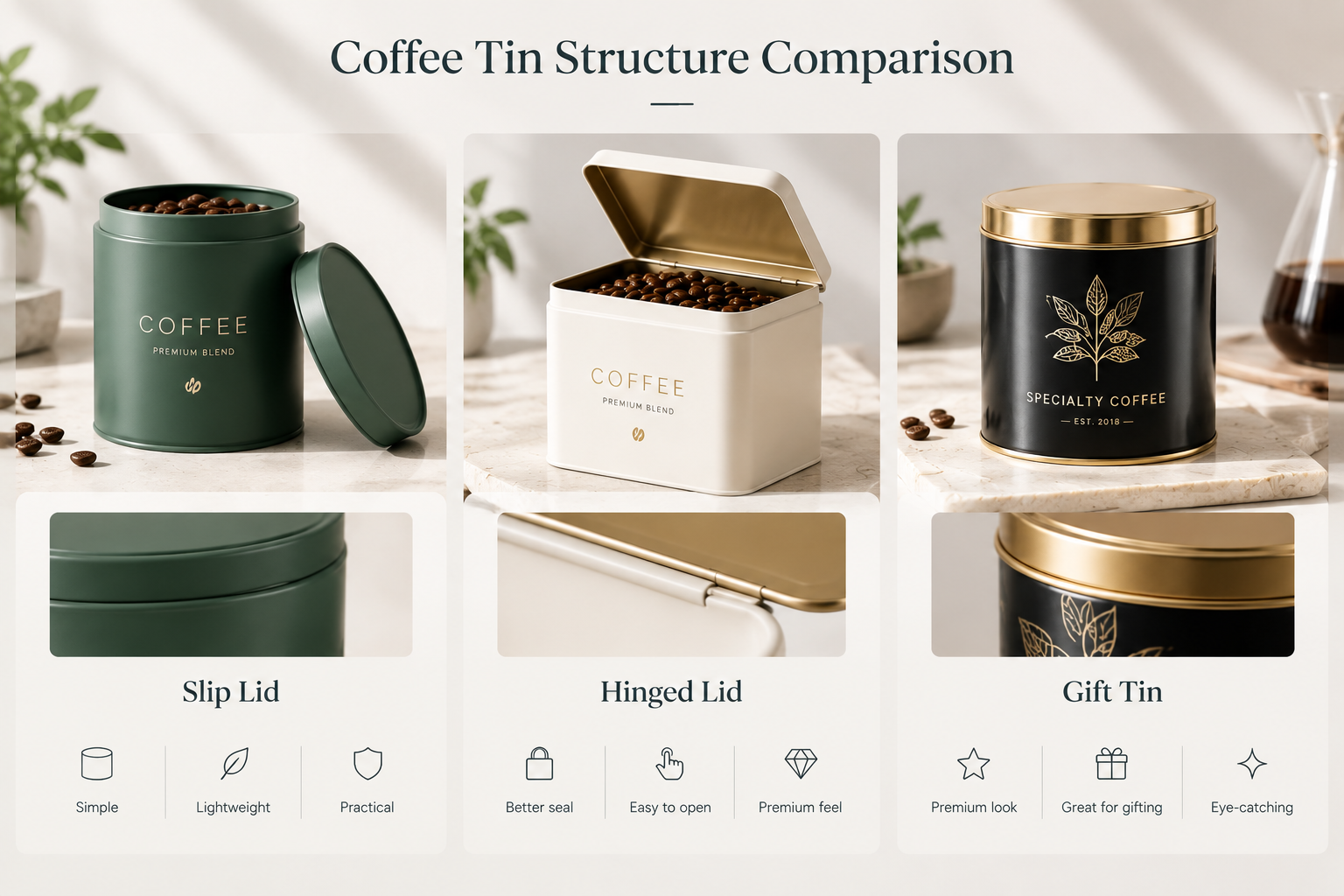
Which Lid Works Best for Coffee Tins?
Choose the lid by how customers will use the tin after purchase, and by how much air protection you expect from the closure.
| Lid type | Suitable for | Points to confirm |
|---|---|---|
| Slip lid | Simple opening, cost-conscious projects | A slip lid is not an airtight seal, so keep the coffee in a sealed inner bag |
| Hinged lid | Premium collections, repeated opening and closing | Hinge clearance with the inner bag and any scoop |
| Gift-style tin | Seasonal products and coffee gift sets | Insert layout and the overall gift presentation |
For a detailed comparison of lid structures, see our rectangular tin lid types guide and our rectangular tins with lids guide. To browse ready-made structures, see our Hot Sale Tin Packaging range. For gift sets, see our gift tin box page.
Are Coffee Tins Food Safe?
Coffee tins that hold food must use materials and coatings suitable for food contact. Requirements depend on where the product is sold.
- United States: Food-contact materials are regulated by the FDA.
- European Union: Food-contact materials fall under Regulation (EC) No 1935/2004, with good manufacturing practice rules in Regulation (EC) No 2023/2006. Regulation (EU) 2024/3190 also restricts bisphenols, including BPA, in certain food-contact materials.
Tell your manufacturer where the product will be sold and whether the coffee touches the tin directly or sits in a sealed inner bag. Request the compliance documents you need before confirming the order. This section is general information and does not replace testing or legal advice for your market.
How Can You Customize Coffee Tins for Branding?
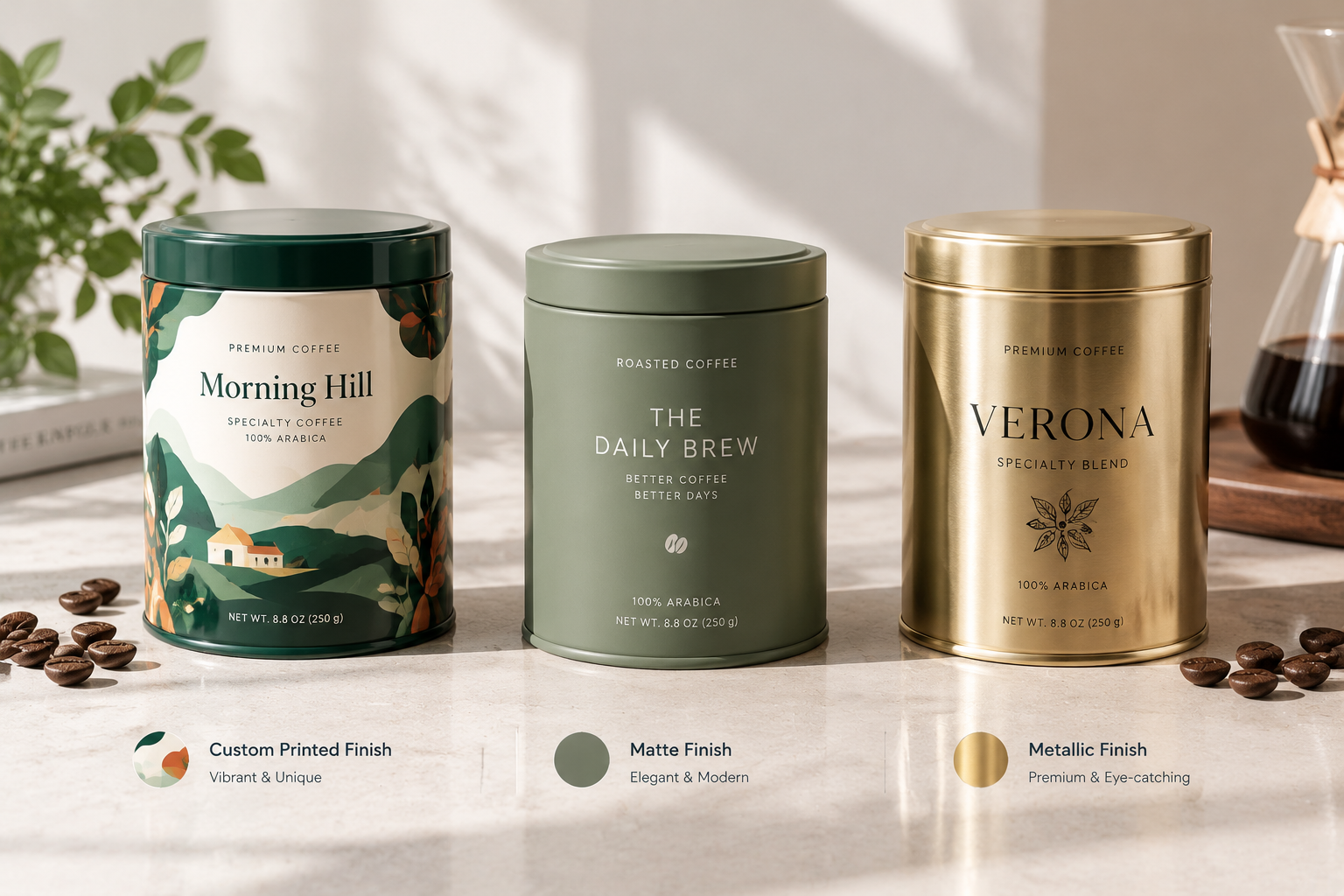
Coffee tins can carry full-color printing, matte or glossy finishes, metallic effects, and embossed details. Because the same printing process applies across tin projects, artwork file preparation, color, and finishes are covered in our candy tin artwork and printing guide, and its checks apply to coffee tins as well.
Two coffee-specific points are worth planning early. First, leave clear space for roast level, origin, weight, and any legal text your market requires. Second, check that artwork does not run across the lid seam or edge where the printing area changes.
How Do You Test Fit Before Mass Production?
A sample test shows problems that drawings cannot. Use real filled bags, not empty ones.
- Insert and remove the bag several times to check the clearance.
- Close the lid with the bag valve or fold in place.
- Check that any scoop, insert, or gift item fits without pressing on the lid.
- Test the lid after repeated opening if customers will reuse the tin.
A typical project moves through six stages: product specification, structure selection, artwork approval, sampling, production with quality inspection, and shipment. For quantities, lead time, and quote planning, use the cost guide linked above.
What Should You Include in a Coffee Tin Inquiry?
Send the following so a quote and sample can be prepared accurately:
| Information | Why it matters |
|---|---|
| Coffee type (beans or ground) and net weight | Determines fill volume |
| Inner bag type, with measured dimensions | Sets the internal size |
| Valve or fold details | Affects required height |
| Target market | Determines food-contact requirements |
| Lid preference | Affects structure and cost |
| Artwork and finish requirements | Affects printing planning |
| Estimated order quantity | Used to confirm MOQ |
| Required delivery date | Used to plan sampling and production |
Send your inquiry through our contact page.
What Mistakes Should Brands Avoid When Ordering Coffee Tins?
- Sizing by coffee weight only. Always size by the filled inner bag.
- Assuming the lid seals like a bag. Keep coffee in a sealed inner bag when air or moisture protection matters.
- Ignoring the valve and fold. These add height that is easy to overlook.
- Designing artwork before the structure is confirmed. Check the tin shape, edges, and lid seam first.
- Judging by unit price alone. Rework, delays, and poor fit can raise the total cost.
FAQ
What size coffee tin is suitable for my coffee product?
It depends on the filled inner bag, not only the coffee weight. Measure the sealed bag, add clearance, and confirm the fit with a sample.
Can I order custom printed coffee tins with my logo?
Yes. Custom coffee tins can carry brand artwork, logos, colors, and a range of finishes. See the artwork and printing guide for file preparation and finish options.
Are metal coffee tins suitable for roasted beans and ground coffee?
Yes, they are commonly used for both. For best protection, keep the coffee in a sealed inner bag, and for freshly roasted beans consider a bag with a degassing valve.
Is a coffee tin airtight?
Most tin lids are made for closure and reuse rather than gas-tight sealing. Use a sealed inner bag when airtight protection matters.
What is the MOQ for custom coffee tins?
As of October 14, 2026, custom tins typically start at 3,000–10,000 pieces, depending on structure and printing complexity. Stock items start at about 100–200 pieces (please confirm availability). See our FAQ page and the cost, MOQ, and lead time guide for details.
How long does it take to produce custom coffee tins?
Custom printed tins take about 25–30 days to produce, depending on quantity and production schedule, and customized samples take about 5–15 days. Add shipping time and a buffer for artwork approval.