By Liyipackaging Packaging Team | Published and updated: September 30, 2026
Quick takeaway: Start with the filled tea package, not the empty tin. Measure the packed product, confirm the quantity and arrangement per tin, then check the usable internal space. Choose the lid and any secondary packaging after that, and confirm the fit with a physical sample before production.
We develop custom tins for brands and packaging buyers, from structure and sampling through production and quality control. On tea projects the same situation comes up again and again: the buyer knows the weight they want to pack, but not the internal size or structure the tin needs.
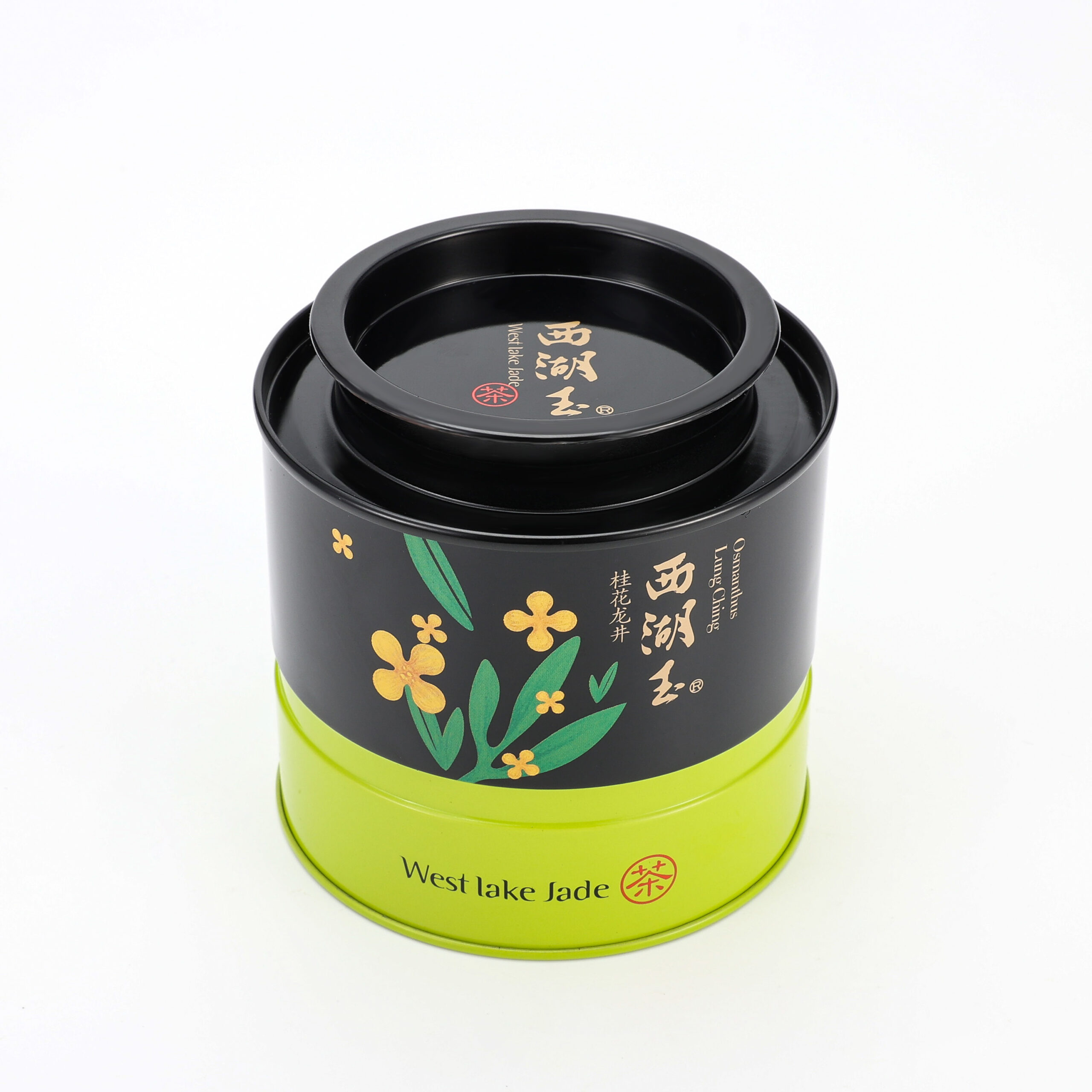
That weight alone is not enough. 100 g of loose leaf tea, tea bags, matcha powder and compressed tea can all take up very different volumes, and an inner pouch changes the space required again. If you would rather start from an existing structure, take a look at our custom Tea Tin.
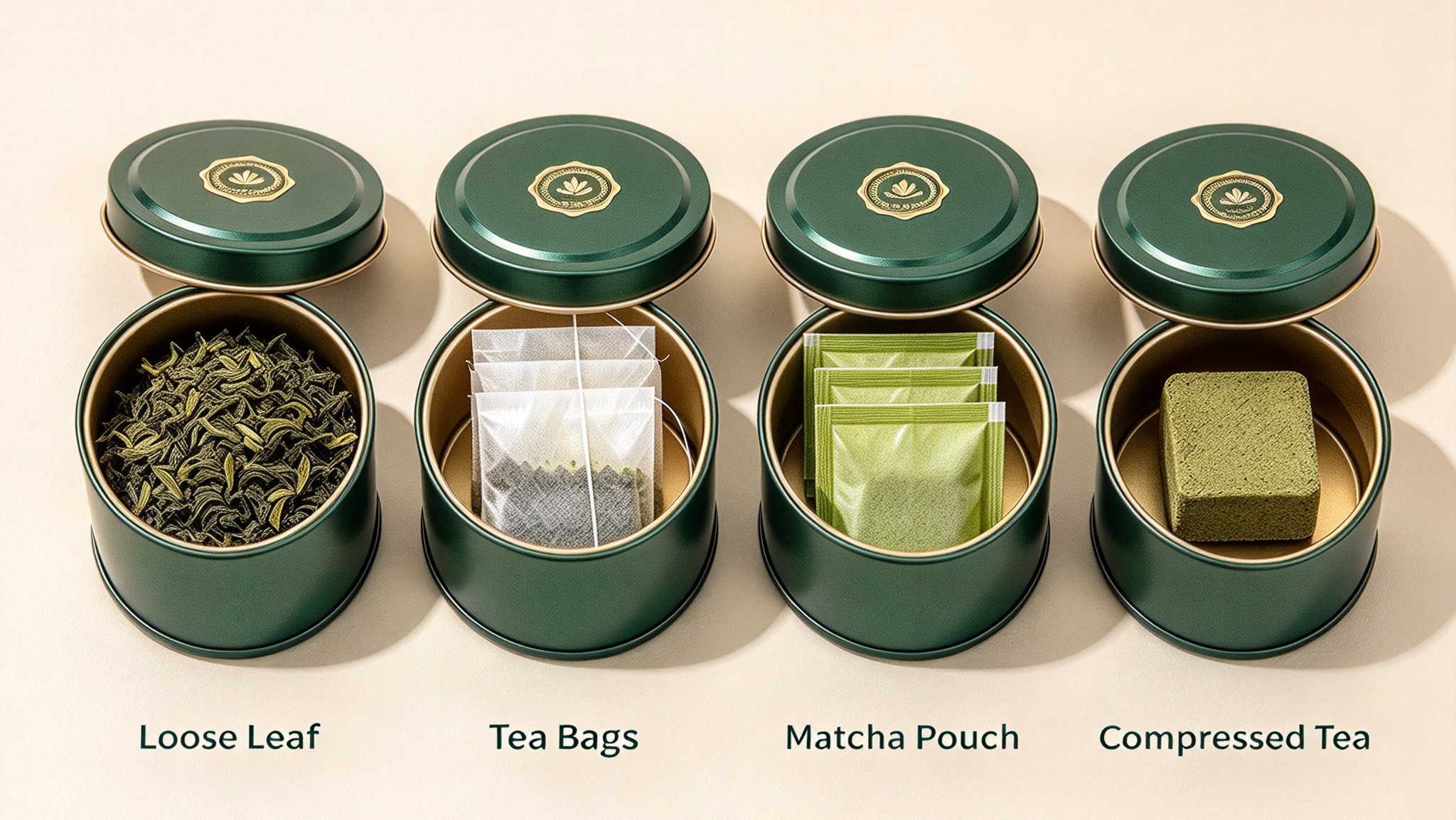
How Does Tea Format Change the Space You Need?
The same nominal weight can occupy very different volumes depending on the tea and its inner packaging.
| Tea format | What changes the required space | What to measure |
|---|---|---|
| Loose leaf tea | Leaf size, shape and packing method change the filled volume even at the same weight | Filled pouch length, width and thickness |
| Tea bags / sachets | Easier to count, but bag size and arrangement drive the layout (20 flat bags need a different tin from individually wrapped sachets) | Single bag size, number per tin, arrangement |
| Matcha powder | Fine powder, usually in a primary pouch or inner container | Size of the primary pouch or container |
| Compressed tea | Compact for its weight, but product height and ease of removal matter | Product diameter/height, how it is taken out |
| Gift set | Scoops, cards or several tea varieties add footprint and height | The whole arrangement, not the tea alone |
A common configuration is tea → inner pouch → tin. The pouch can act as the primary barrier, while the tin provides rigidity, light protection, branding and a reusable package. If the pouch is already chosen, measure it after filling and sealing, because the filled size is what the tin has to accommodate.
If the tin will sit inside a larger gift set, develop it as part of the complete set rather than sizing it on its own.
What Does Tea Need Protection From?
Choosing a metal container is only part of the decision. Moisture, light, unwanted odors and the condition of the inner package all affect the final configuration.
Moisture. Tea is a dry product, so moisture control matters. The tin body is a strong physical barrier, but the inner pouch and its closure are part of the same protection system. Whether a package gives the barrier you need depends on the lid, closure, inner package and intended use, so we treat the tin as one part of that system rather than promising a sealed package.
Light and aroma. A fully printed metal tin blocks direct light. Tea can also pick up odors, so a strongly scented tea or a tin that will be reused for a long time deserves a specific check. The packaging should not introduce odors of its own, and it should be evaluated with the actual product.
Typical configurations:
- Tea + inner pouch + tin
- Tea + sealed foil-based pouch + tin
- Tea bags + inner package + tin
- Tea + tin with a suitable internal sealing structure
Some brands also add a desiccant. If nitrogen flushing is part of the process, it belongs to the primary packing step and should not be assumed to come from the tin. The right combination depends on the tea, your packing process and the shelf-life conditions you need.
How Do You Work Out the Internal Size of a Tea Tin?
Confirm the internal dimensions before relying on external ones. The usable space has to hold the filled tea package, the closure structure and any extra components.
A simple way to think about it:
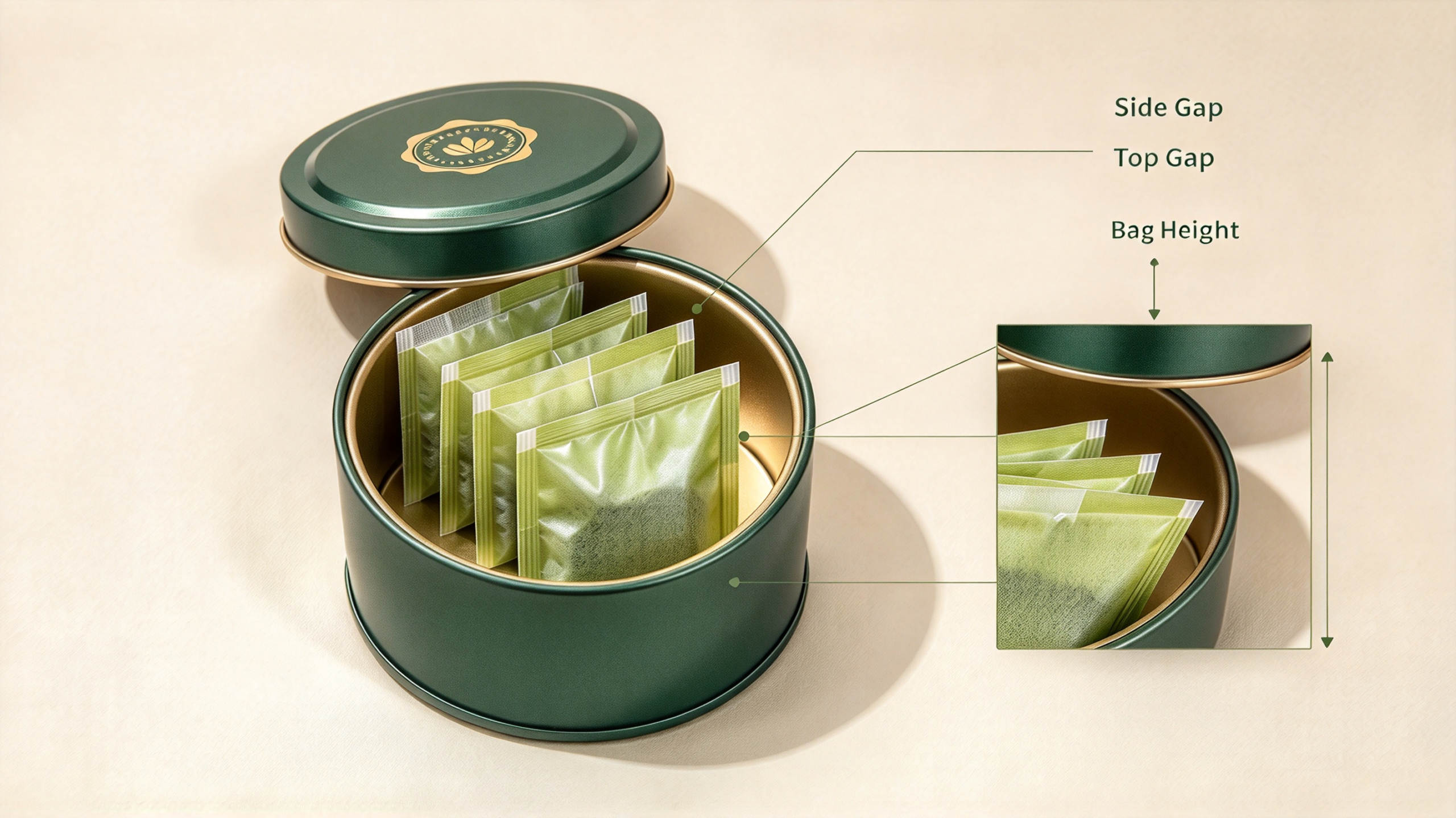
- Internal length and width ≥ filled package length and width + clearance on each side
- Internal height ≥ filled package thickness + the space taken by the lid, inner plug or liner, if any
- Clearance is confirmed on the physical sample, not assumed from a drawing
What to record for a pouch: filled length, filled width, filled thickness, quantity per tin, pouch material and closure method.
What to record for tea bags or sachets: single bag size, number per tin, planned arrangement, and whether an outer pouch is used.
Why isn’t “100 g” enough?
Take two brands that both sell 100 g of tea. Brand A packs a tightly rolled oolong. Brand B packs a light, fluffy white tea blend. Both labels say 100 g, but the tea takes up very different space, so the filled pouches and the tins around them are different.
| Brand A: rolled oolong | Brand B: fluffy white tea blend | |
|---|---|---|
| Net weight | 100 g | 100 g |
| Approx. bulk density of the tea | ~0.45 g/cm³ | ~0.20 g/cm³ |
| Approx. volume of the tea | ~220 cm³ | ~500 cm³ |
| Filled pouch (L × W × T) | 110 × 80 × 35 mm | 150 × 100 × 45 mm |
| Starting clearance allowance | 5 mm per side, +10 mm in height | 5 mm per side, +10 mm in height |
| Resulting internal tin size (rectangular) | 120 × 90 × 45 mm | 160 × 110 × 55 mm |
Which Lid and Shape Suit a Tea Tin?
For tea, the lid should follow how often the tin is opened and what closure the project needs. A removable lid suits a traditional package where the top comes off completely. A hinged lid stays attached to the tin, which is practical for tins opened every day. If you want the lid held down by a buckle, see our tinplate cans with buckles. Some projects also add an inner plug or liner, which needs its own allowance in the internal height. Whichever structure you choose, confirm the fit on a physical sample.
On shape, a long flat pouch often sits naturally in a rectangular tin, while a compact or bagged product may suit a round or square structure. If you are considering a rectangular format, our rectangular tins with lids guide covers it in more detail.
Whatever you choose, one question decides it: with the pouch inside, can the customer open, reach the tea and close the tin comfortably without disturbing the product? The sample should confirm that.
Are Tea Tins Food Safe?
Our tinplate tins can be produced with food-grade materials, and the inside of the tin can use food-grade lacquer so the tea does not touch the tinplate directly (see our FAQ). But “food-grade” alone does not tell a buyer enough. What matters is the complete contact configuration: the internal coating, the inner pouch, the intended use and the target market.
- U.S.: FDA regulates food-contact substances in packaging according to their intended use and the applicable authorization pathway, so status can depend on the individual substances in the finished article.
- EU: Regulation (EC) No 1935/2004 is the general framework for food-contact materials, and Regulation (EC) No 2023/2006 sets good manufacturing practice requirements. Regulation (EU) 2024/3190 restricts bisphenol A and certain other bisphenols in food-contact materials, including coatings and varnishes.
If your tea will be sold in the U.S., the EU or another regulated market, tell us at the quotation stage so the coating and inner packaging can be discussed against that market.
How Should You Check a Tea Tin Sample?
Test the sample with your actual packing configuration, not just by looking at it.
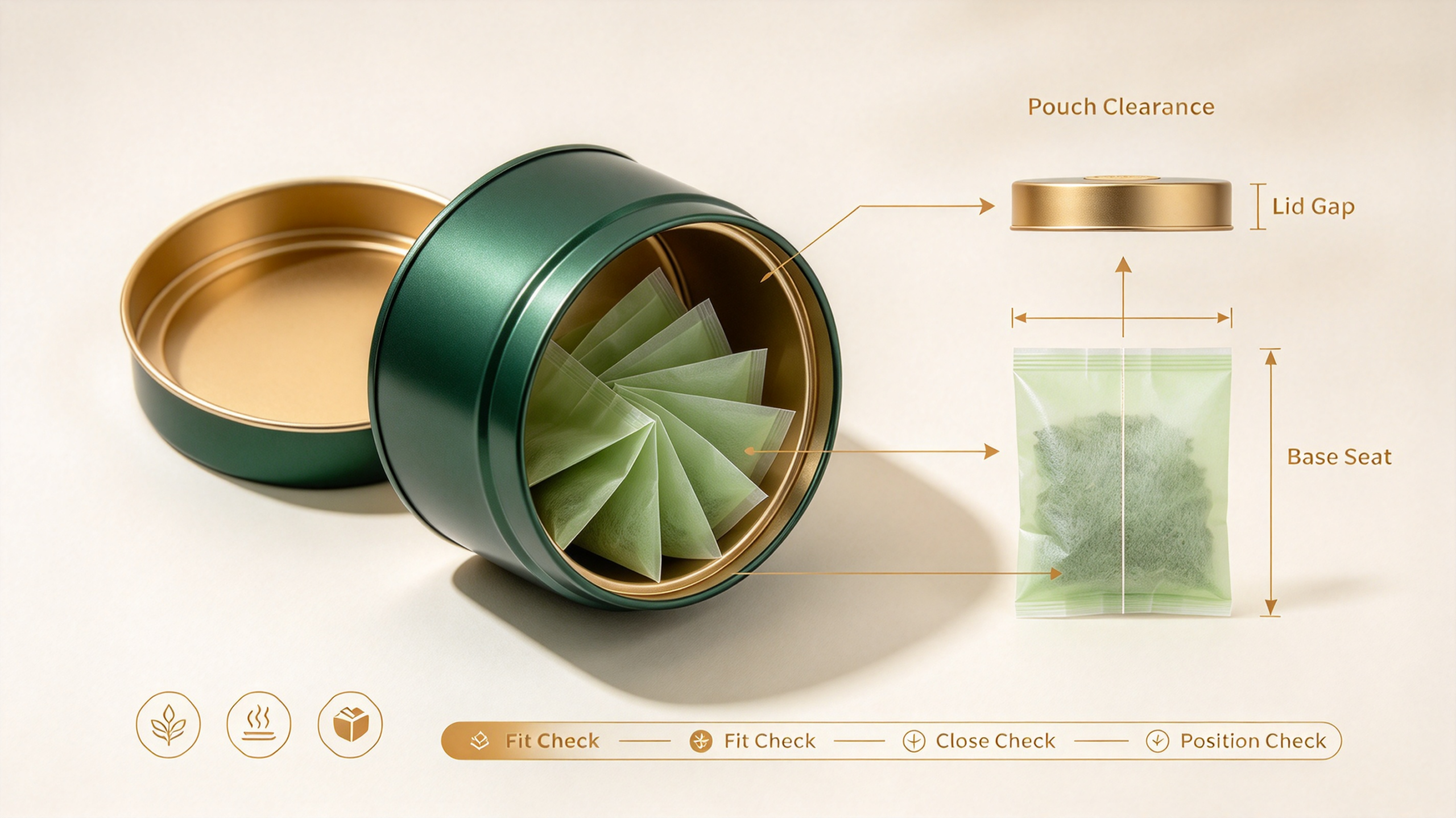
- Does the filled pouch sit flat, with enough clearance?
- Does the pouch shift when the tin is handled or tilted?
- Does the lid close without pressing on the pouch, and does it stay positioned after repeated opening?
- If there is an inner plug or liner, does it interfere with the closure?
- Can the customer take the pouch out easily, and does the closure still work after filling?
- Odor: smell the empty tin first, then the complete configuration. Do not assume a visually correct tin works for a highly aromatic tea.
- Gift presentation: if it is part of a set, check the full arrangement, including other varieties or accessories.
What Should You Send for a Custom Tea Tin Quote?
You do not need to know the final tin dimensions. Send the product details and we can start the structural discussion from there.
| Requirement | What to provide |
|---|---|
| Tea format | Loose leaf / tea bags / sachets / matcha / compressed tea |
| Target quantity | Weight or number of pieces per tin |
| Packed product | Filled pouch or actual product dimensions |
| Inner package | Pouch, foil-based bag or other |
| Tin structure and lid | Existing style or custom; preferred lid, if known |
| Gift set | Whether the tin goes into a larger set |
| Target market | U.S., EU or other |
| Artwork | Existing, concept, or not started |
| Estimated order quantity | Production quantity |
For example: rolled oolong, 100 g per tin, filled pouch 110 × 80 × 35 mm, custom size, removable lid, target market U.S., estimated quantity 5,000 pcs. That is enough to begin.
For MOQ, sampling and production timing, see our cost, MOQ and lead time guide and the current FAQ. For artwork preparation, see our artwork and printing guide.
Send Us Your Filled Tea Package Details
The sequence that works is: tea format → filled package → internal space → protection system → lid → sample → production.
We have more than 25 years of experience in tin packaging and a 3,000㎡ facility (see About Us), and we can support a project from structure development and sampling through printing, production and pre-shipment quality control.
If you already have your tea product dimensions and target quantity, send them to us and we will discuss the right tea tin structure and sample plan with you.
FAQ
Are tea tins airtight?
Not every tea tin is. Sealing performance depends on the tin structure, lid, any inner sealing component and the inner pouch used with the tea. If you need a specific barrier performance, confirm the complete packaging configuration with the manufacturer.
Do tea tins need an inner pouch?
Not necessarily. It depends on the tea, your packing process, the protection you need and the shelf life you expect. An inner pouch adds a barrier layer, especially when the tin works mainly as the outer package.
Are tea tins food safe?
They can be produced for food packaging, but suitability depends on the materials, coatings, inner packaging and intended use. See the food-safety section above and tell us your target market when requesting a quote.
What size tin fits 100 g of loose leaf tea?
There is no reliable universal size based on 100 g alone, because loose leaf tea packs to different volumes and an inner pouch changes the space required. Measure the filled pouch, add the clearance and closure allowance, and confirm on a sample.
Can custom tea tins be used for gift sets?
Yes, but develop the tin as part of the complete set. Extra tea varieties, accessories, inserts or an outer box all affect the required height and footprint.