By Liyipackaging Packaging Team | Published and updated: October 10, 2026
Quick takeaway: Choose the lid by how the tin will be opened, not by how it looks when closed. A removable lid suits tins that are opened occasionally and need a wide, clear opening. A hinged lid suits tins that are opened again and again. A sliding lid suits slim contents accessed from one end. Whichever you choose, test the lid-specific points in this guide on a sample before placing an order.
Choosing among rectangular tin lid types is one of the first structural decisions in a custom tin project. It affects how the tin feels in use, how the contents are accessed and how the project is quoted. This guide compares the main lid options and shows what to check for each one. For the broader decision on proportions and structure, read our rectangular tins with lids guide, or browse the rectangular tin box range to see existing styles.
How Are Rectangular Tin Lids Named?
Lid names vary between suppliers, so the same word can describe different structures. Two questions sort most designs:
- Does the lid come off completely, or does it stay attached to the body?
- If it comes off, how does it meet the body: does it wrap over the outside, sit into the opening, slide along the body or lock with a clasp?
When you send a request, describe the opening behavior and attach a reference photo or drawing instead of relying on the name alone. This avoids misunderstandings about the structure you have in mind.
Which Rectangular Tin Lid Types Are Most Common?
| Lid type | How it opens | Works well for | Watch out for |
|---|---|---|---|
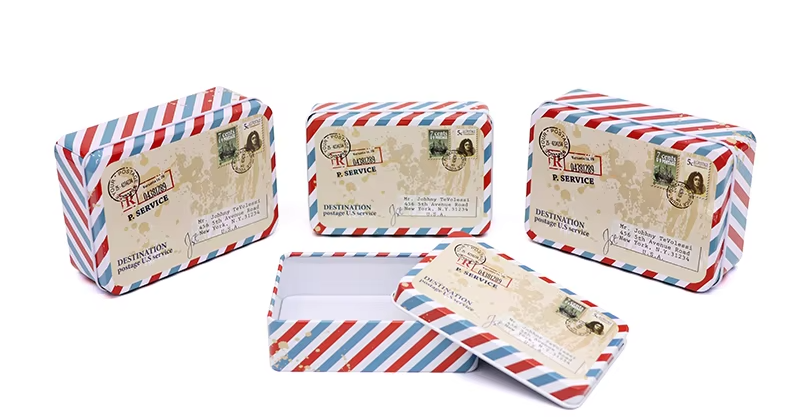
| Removable overlap lid (slip lid) | The lid wraps over the outside of the body and lifts off | Gift sets, items arranged or removed from above | A fit that is too tight or too loose; scuffing where the edges meet |
| Removable inset lid (lift-off lid) | The lid sits into the opening and lifts out | Storage tins, designs that need a flush, tidy look | A lid that shifts if the fit is loose; rough edges |
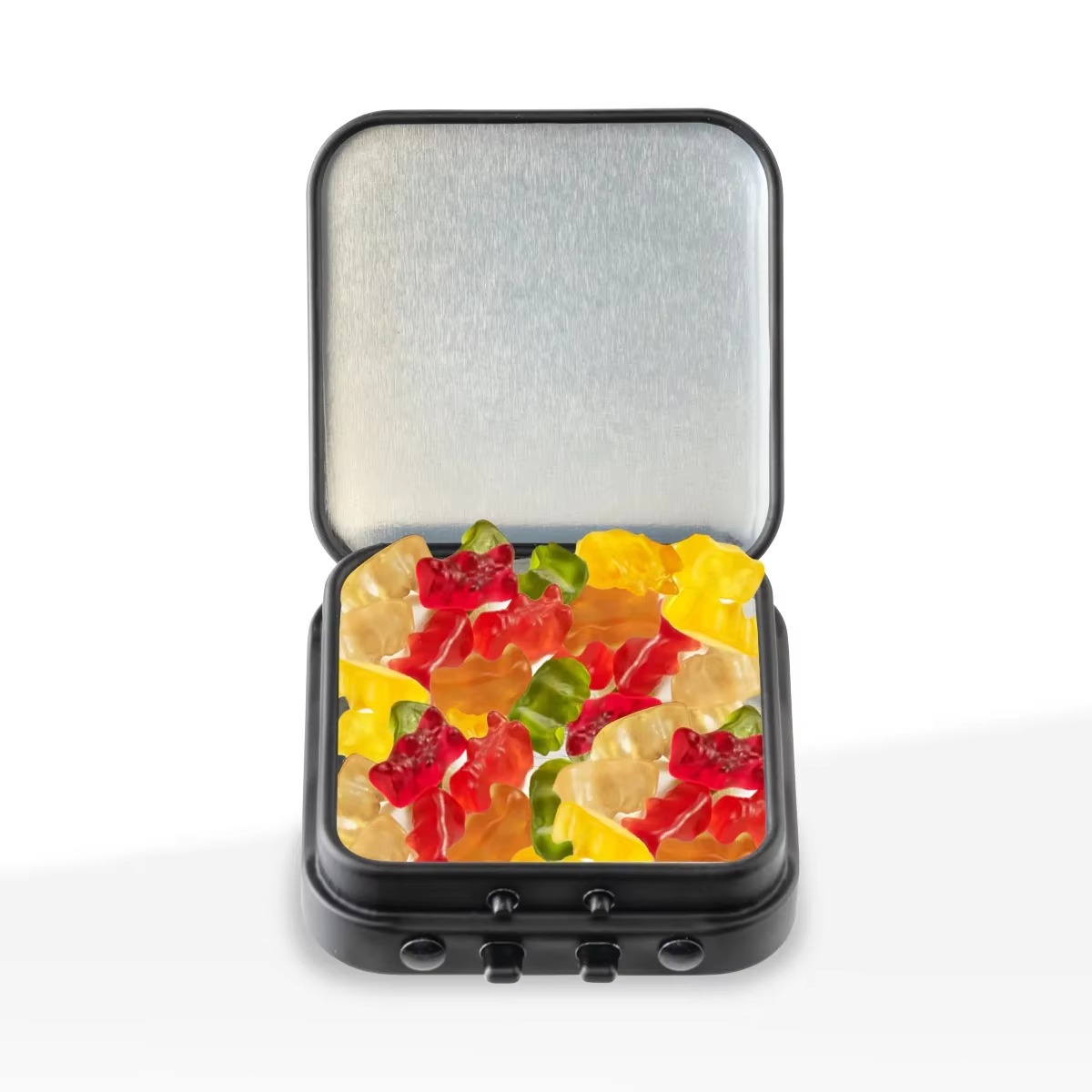
| Hinged lid | The lid stays attached and swings open | Items used frequently, such as desk or pocket tins | Clearance on the hinge side; opening angle; one more part to inspect |
| Sliding lid | The lid slides along the body | Slim items such as pens or cards | Smooth travel along the full length; contents catching the edge |
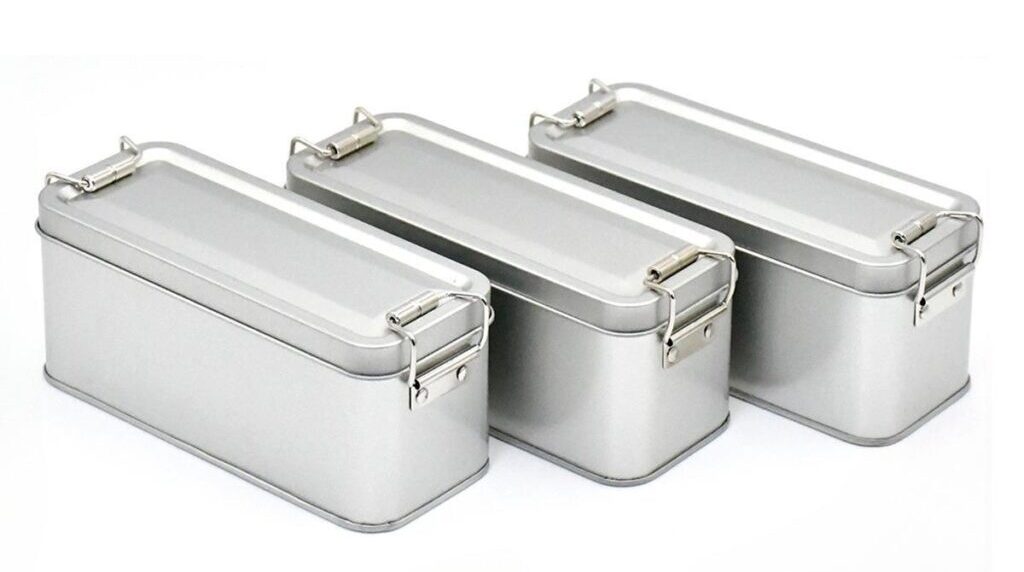
| Clip lid | A clip or buckle holds the lid closed | Tins that are carried or handled often | Clip tension; alignment; whether it can be opened with one hand |
| Window lid | A transparent window in the lid shows the contents | Products that sell on appearance | Window edges and finish; how the contents look through the window |
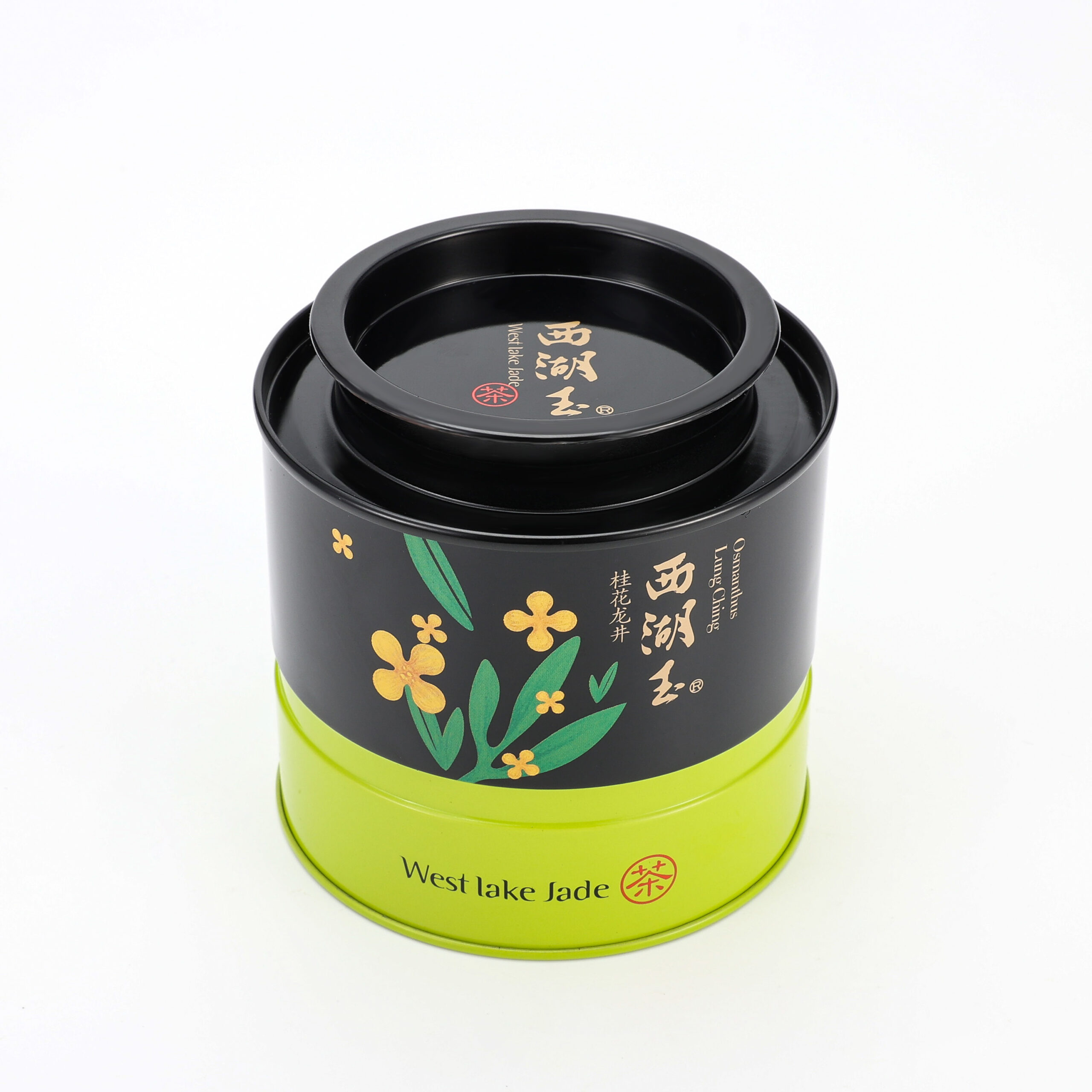
Our tin style library also includes double-lid structures. If you need two layers of closure, describe the intended opening sequence when you request a quotation.
Removable Lids: Overlap vs. Inset
An overlap lid is easy to align because it covers the edge of the body, and its visible lid depth gives extra room for artwork. An inset lid sits closer to flush, which gives a tidier look but depends more on a carefully controlled fit.
Both types come off completely, so neither is better in every case. The difference lies in appearance, alignment and how the fit is controlled.
Hinged Lids
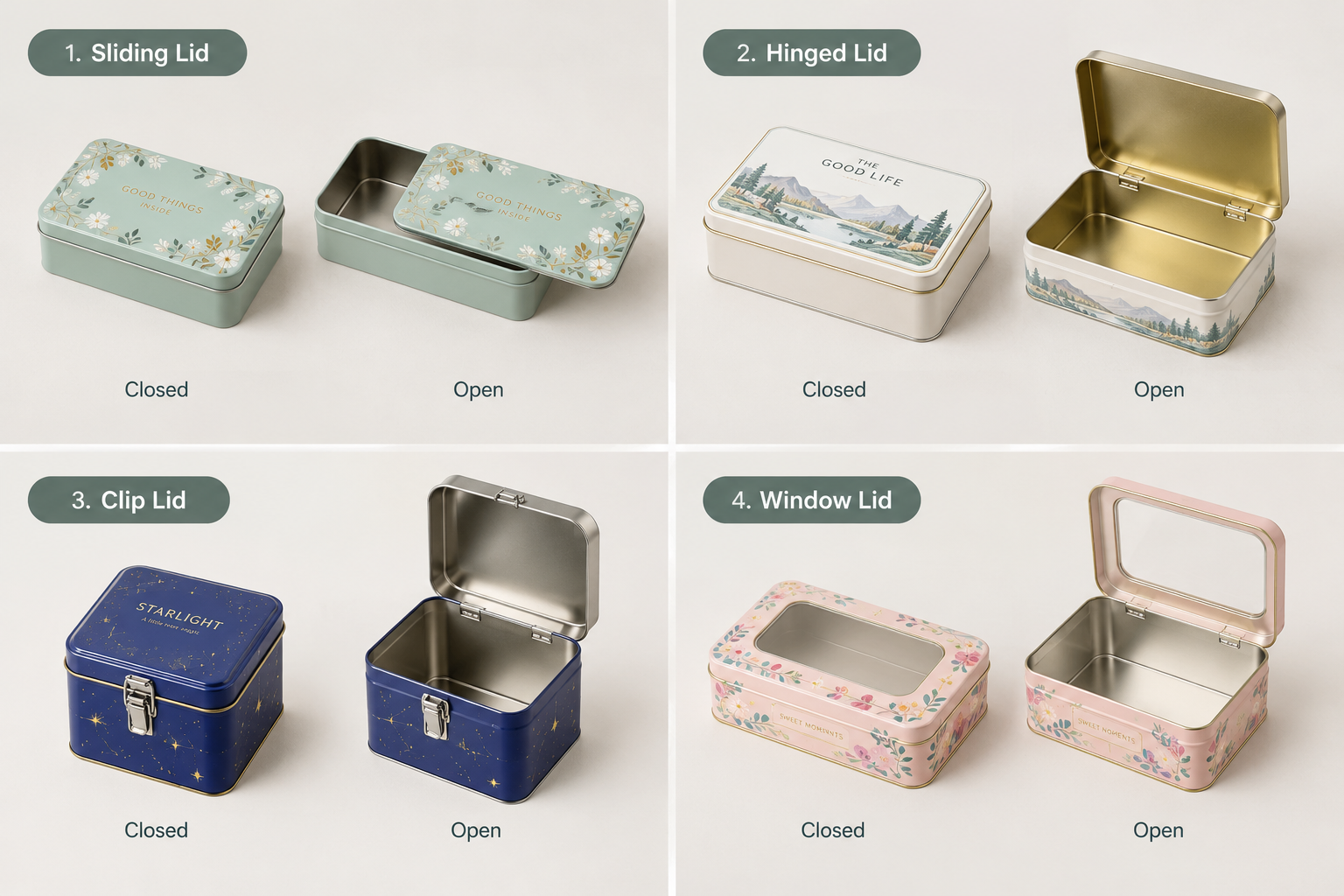
A hinged lid stays attached to the tin, which matters when users open it dozens of times. The trade-off is that the hinge side takes up space and needs its own inspection.
Think about where the contents will sit relative to the hinge and how far the lid must open for the user to reach them comfortably. A lid that opens only part of the way can make removal awkward.
Sliding, Clip and Window Lids
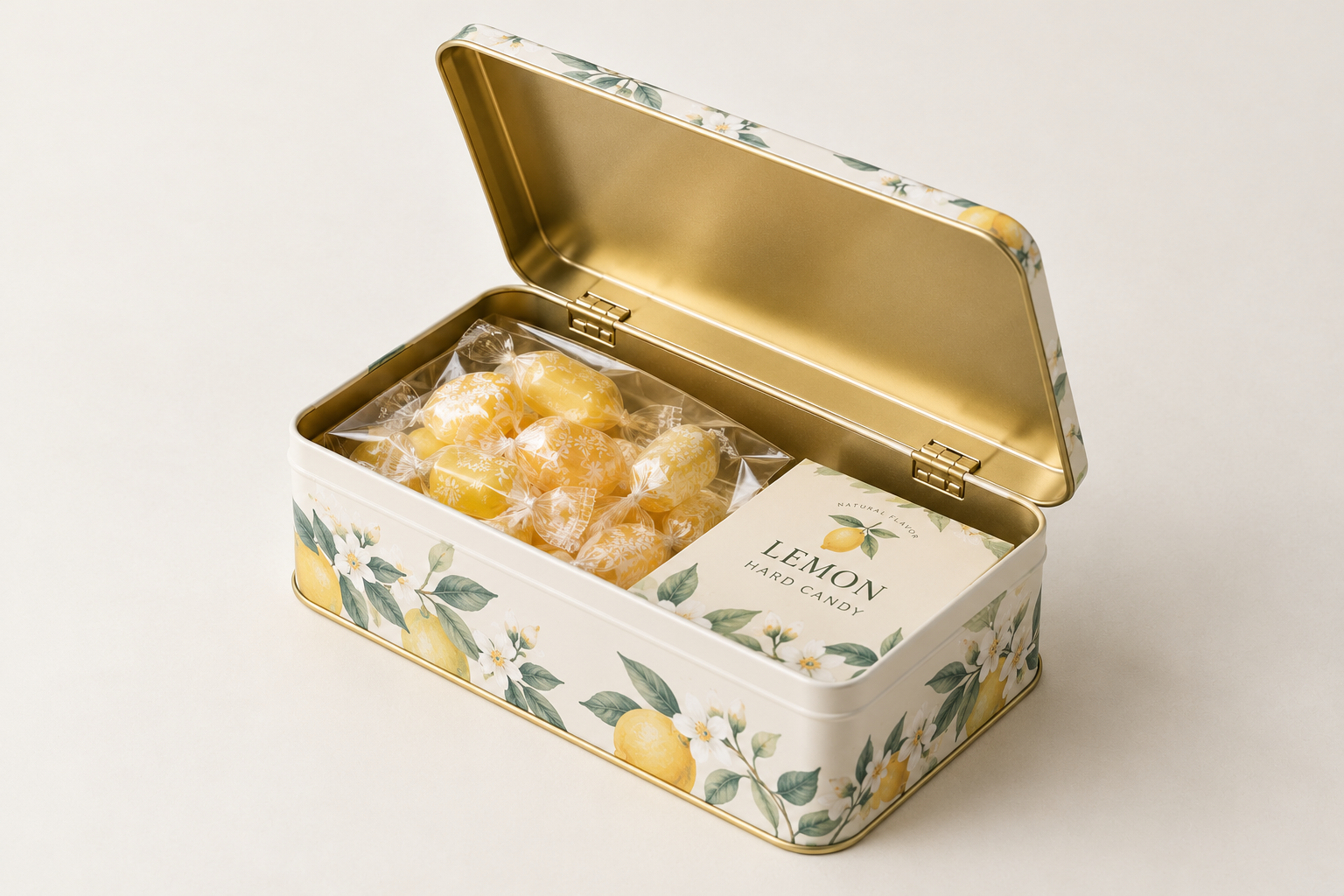
A sliding lid keeps the profile slim and suits flat or narrow contents. A clip lid adds a positive closure for tins that are carried or handled often. A window lid lets the buyer see the product before opening, so the appearance of the contents matters as much as the tin itself. Availability for each structure depends on the tin size and design, so confirm it during quotation.
How Do You Pick a Lid by Use?
Start with how the tin will be used day to day:
- Opened once or twice, then kept: a removable lid gives the widest opening.
- Opened daily at a desk or counter: a hinged lid saves the step of setting the lid aside.
- Carried in a bag or pocket: consider a clip lid, and test whether the lid resists opening by accident.
- Displayed on a shelf: a window lid shows the contents, while a printed lid carries the artwork.
- Stacked on a shelf or packed in cartons: check that the lid profile does not interfere with stacking.
Consider a stationery gift set that holds pens and a small notebook. A hinged lid looks convenient for desk use, but if the pens sit close to the hinge side, a lid that cannot open wide enough may catch them. The solution could be a lid that opens further, a different arrangement of the contents or a removable lid. A physical sample reveals this kind of issue in a way a drawing does not.
For cookie and biscuit packaging, our rectangular cookie tin guide covers applications and packaging ideas. Food-specific points such as inner bags and moisture are covered in our guides to custom tea tins, custom mint tins and custom popcorn tins. For presentation-focused sets, see our gift tin box guide.
Which Lid-Specific Checks Should You Run on a Sample?
Once the lid structure is chosen, test these points on a physical sample:
- Repeated use: open and close the tin many times, not once. Look for scuffed edges, a loosening fit or a hinge that becomes stiff.
- Edge contact: inspect where the lid and body rub together, especially on printed or coated finishes. Our artwork and printing guide explains how artwork files and finishes are prepared, and the points apply to other tin types as well.
- Opening access: confirm that the intended user can open the tin easily, for example with a thumb or fingernail, without a tool.
- Hinge side: check the opening angle and make sure nothing catches on the hinge or the contents.
- Handling and stacking: confirm the lid stays in place when the tin is handled and packed in cartons.
How Does Lid Choice Affect Cost and Lead Time?
A more complex lid, such as a hinged, sliding or clip structure, can add parts, tooling or sampling steps. That can influence both the quotation and the schedule. Because the effect depends on the project, ask for the lid options to be quoted side by side so you can compare them on the same basis.
Our custom tin box cost, MOQ and lead time guide explains how to compare quotations, and the FAQ answers common questions about samples and production timing. You can also see ready-made styles in our hot sale tin packaging range.
What Should You Send When Asking for a Lid Recommendation?
To get a useful recommendation, include:
- How often the tin will be opened and by whom
- Whether one-handed opening matters
- Product size and where it sits in the tin
- Whether the tins will be stacked or shipped in cartons
- Estimated quantity and any reference photos
If you are still working out dimensions, our gift tin box size guide explains how to choose them. For fully tailored structures, see our custom solutions. Send your details through our contact page, and our team will help you compare suitable lid structures for your project.
FAQ
Is a slip lid the same as a lift-off lid?
Not always. Both usually come off completely, and suppliers use the names differently. Describe how the lid meets the body, or send a reference photo, so the structure is clear.
Are hinged lids better for frequently opened tins?
They are often more convenient because the lid stays attached. They do need clearance on the hinge side and extra inspection on a sample.
Does the lid type affect the artwork?
It can. An overlap lid shows a band of lid depth around the body, while an inset lid shows mainly the top surface. Choose the lid first, then plan the artwork around what will be visible.
Which lid is best for gift packaging?
Removable lids are common for gift sets because they open wide. The best choice also depends on how the recipient will use the tin afterward.
Final Thoughts
The right lid is the one that matches how the tin will be opened, handled and stored. Compare the lid types by use, run the lid-specific checks on a sample and request side-by-side quotations. When you are ready, send your size, usage and quantity details to our team.