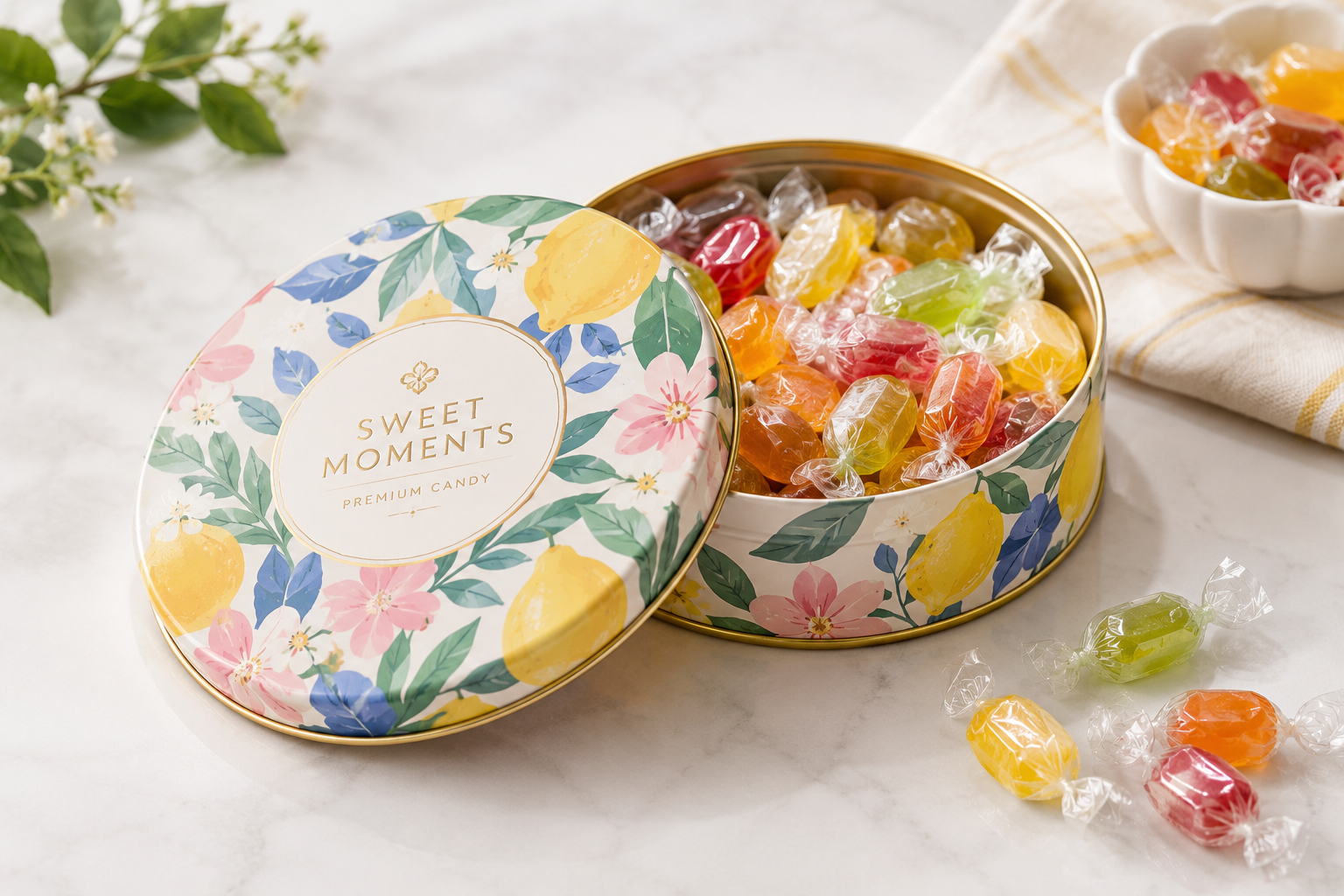
Written by Liyipackaging Packaging Team
We work with brands and packaging buyers on custom tin development, from structure and sampling to printing and production. One thing we see repeatedly is that a candy tin project often starts with a simple request: “We need a tin for our candy.”
The difficult decisions come afterward.
How much candy needs to fit? How much usable space is required? Should the tin use a removable or hinged lid? Will the inner coating suit the intended food-contact application? And when should sampling and production start if the package is for a seasonal launch?
The right custom candy tin should be developed around the product rather than selected from an attractive tin shape first.
This guide takes you through that process in order. If you already know your candy dimensions and quantity, you can use the information below to prepare a more complete quotation request.
Key takeaway:
Candy size → Quantity → Arrangement → Internal space → Tin structure → Sample → Artwork → Production
How Should You Start Choosing a Custom Candy Tin?
Start with the candy itself. The product determines the internal space, while the intended use determines the structure, lid and presentation.
Before discussing a final tin size, establish four things:
- What is the candy size?
- How many pieces go into one tin?
- How will the pieces be arranged?
- How will customers open and use the package?
This prevents a common mistake: selecting a tin first and then trying to make the candy fit afterward.
For a custom project, even a simple product photo and basic dimensions can make the first supplier discussion much more productive.
How Do You Determine the Right Candy Tin Size?
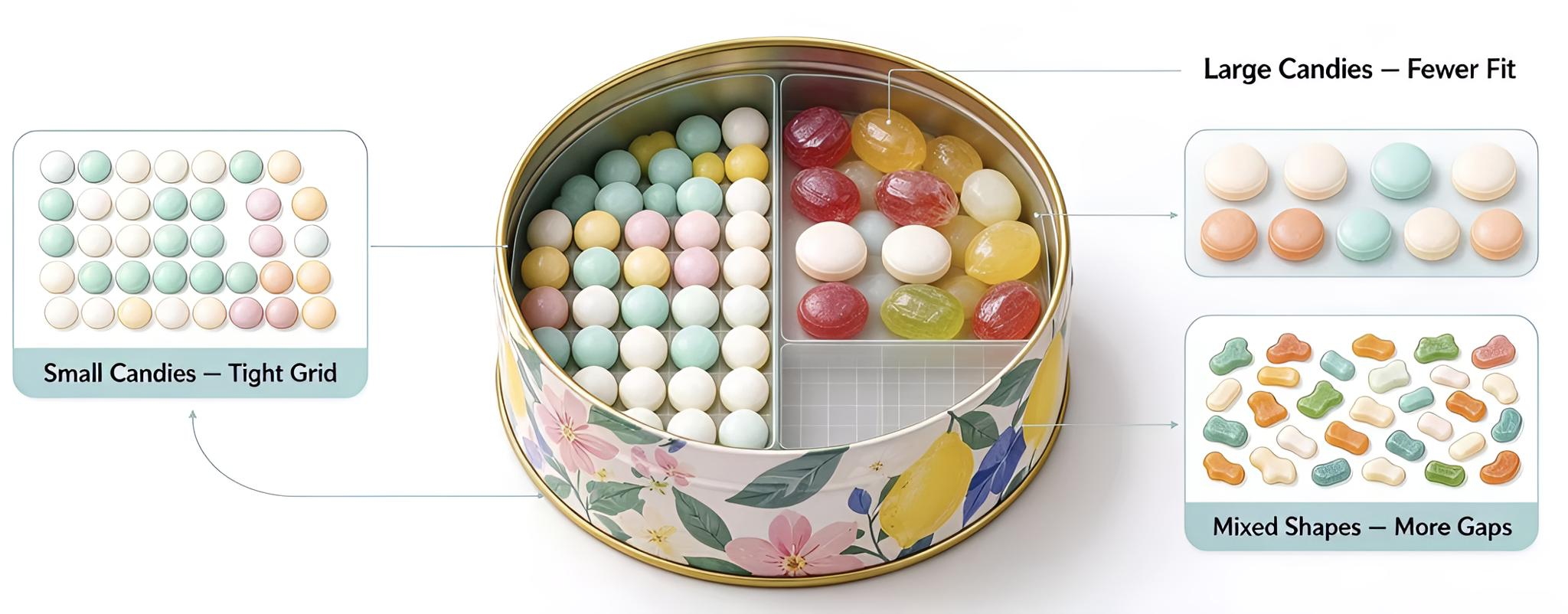
The useful dimension is the internal space, not simply the outside measurement. Candy size, wrapping, quantity and arrangement all affect the space required.
What should you measure first?
Prepare the following information:
| Item | What to provide |
|---|---|
| Candy size | Length × width × height, or diameter |
| Quantity | Pieces per tin |
| Wrapping | Wrapped or unwrapped |
| Arrangement | Rows, layers, loose packing, etc. |
| Accessories | Tray, divider, insert or liner |
| Opening | How the customer needs to access the candy |
How do you calculate the required internal space?
A practical starting point is:
Candy dimensions + quantity + arrangement + required clearance = target internal space
The clearance should not be based on an arbitrary number. It depends on the actual candy, wrapping, arrangement and lid structure.
For example, imagine a brand wants to pack individually wrapped round candies. If the candies are arranged in four rows, the required internal footprint will be different from the same number of candies placed loosely.
That is why “20 pieces” is not enough information to determine the tin size.
Why can two tins with similar outside dimensions have different usable space?
The usable space can be affected by:
- Wall construction
- Corner shape
- Lid structure
- Internal accessories
- Product arrangement
So when evaluating a sample, measure the actual usable interior rather than relying only on the outside dimensions shown on a quotation.
What Size Information Should You Give a Candy Tin Manufacturer?
There is no single standard size that works for every candy product. A better specification sheet connects the candy dimensions with the intended packing quantity.
| Packaging requirement | Example of information to provide |
|---|---|
| Product | Individually wrapped candy |
| Candy dimension | Actual measured size |
| Quantity | Pieces per tin |
| Arrangement | 4 × 5 rows, stacked layers, etc. |
| Internal accessory | None / tray / divider |
| Lid clearance | To be confirmed during sampling |
| Target tin | Internal dimensions to be developed |
This format is more useful than simply requesting a “small,” “medium” or “large” candy tin.
Example calculation:
If a candy is approximately 30 mm in diameter and the buyer wants 20 pieces arranged in a regular 4 × 5 layout, the supplier can use that information to develop the initial internal footprint. The final dimensions should then be confirmed through the physical sample.
This is an illustrative calculation example, not a published customer project.
Which Candy Tin Shape Should You Choose?
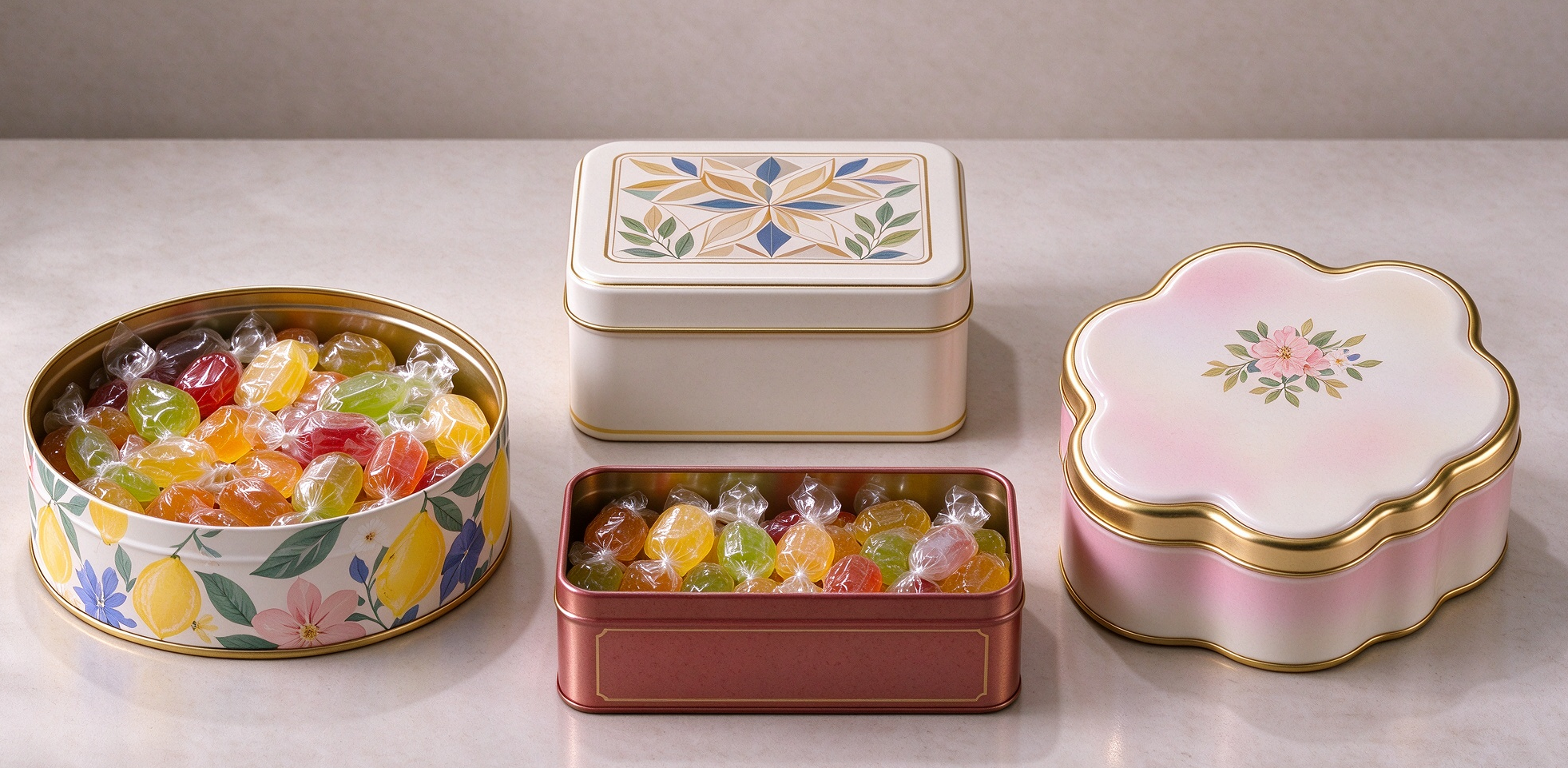
Choose the shape according to the candy arrangement and brand concept. Shape should support the product rather than create unnecessary limitations.
When does a round candy tin work well?
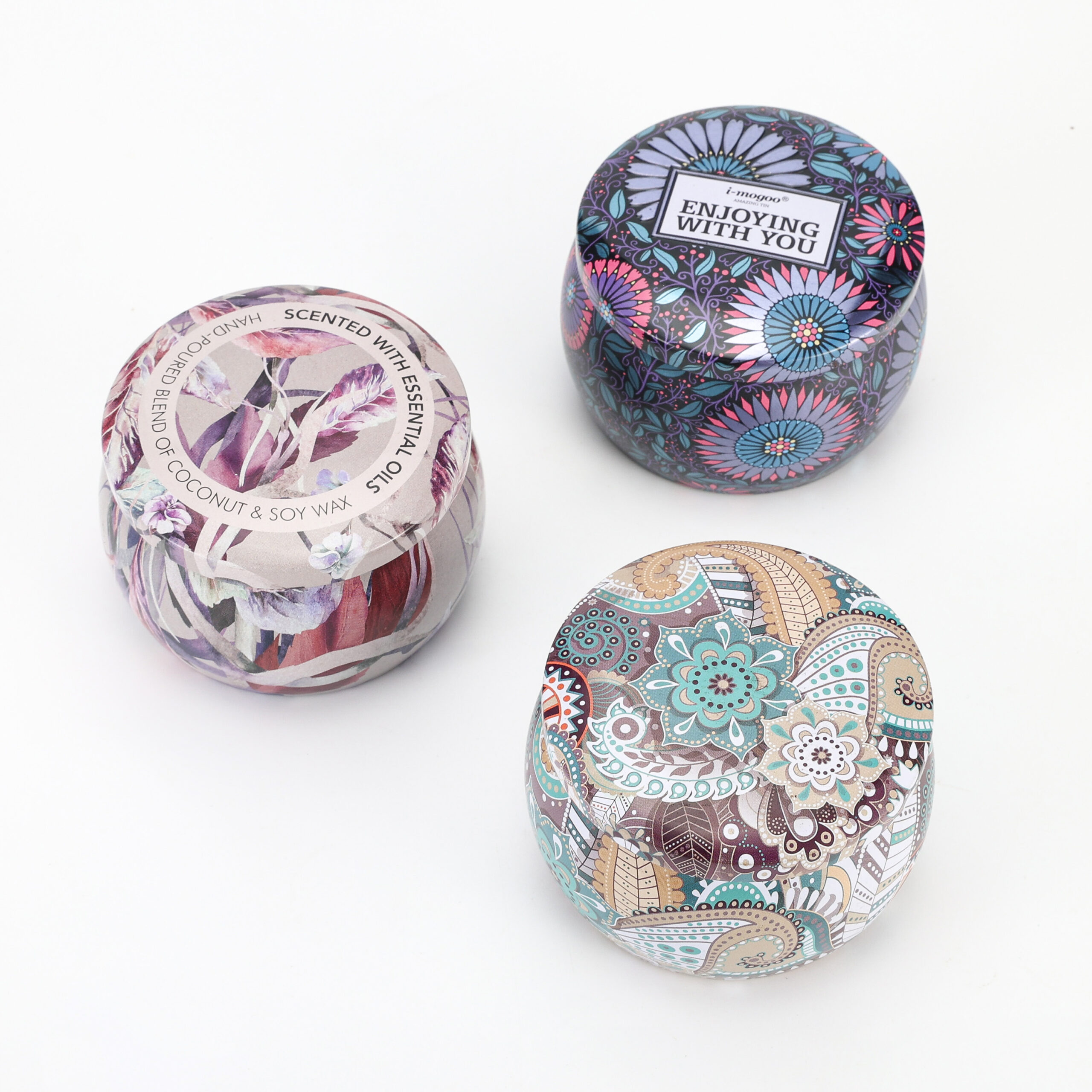
A round tin can suit products that naturally fit a circular footprint or brands looking for a compact, softer visual appearance.
It can work particularly well when the candy arrangement does not require strict rows extending into square corners.
When is a square or rectangular tin more practical?
Square and rectangular tins can make sense when candies are arranged in rows or layers.
They also provide predictable flat surfaces for artwork, which can be useful when the brand needs a clear front, lid or side panel.
When is an irregular candy tin worth considering?
An irregular shape makes more sense when the package itself is part of the brand concept—for example, a seasonal shape, character-inspired outline or promotional package.
Liyipackaging’s existing product range includes irregular tin structures and custom size, shape, printing and inner-accessory options.
For an irregular candy tin, however, product fit, filling, lid operation and artwork should all be checked before committing to the final tooling.
Which Lid Structure Should You Choose?
The lid should follow the intended customer experience. A package that will be opened repeatedly needs a different structure from one designed primarily for presentation.
What lid structures can be considered?
Depending on the project, options can include:
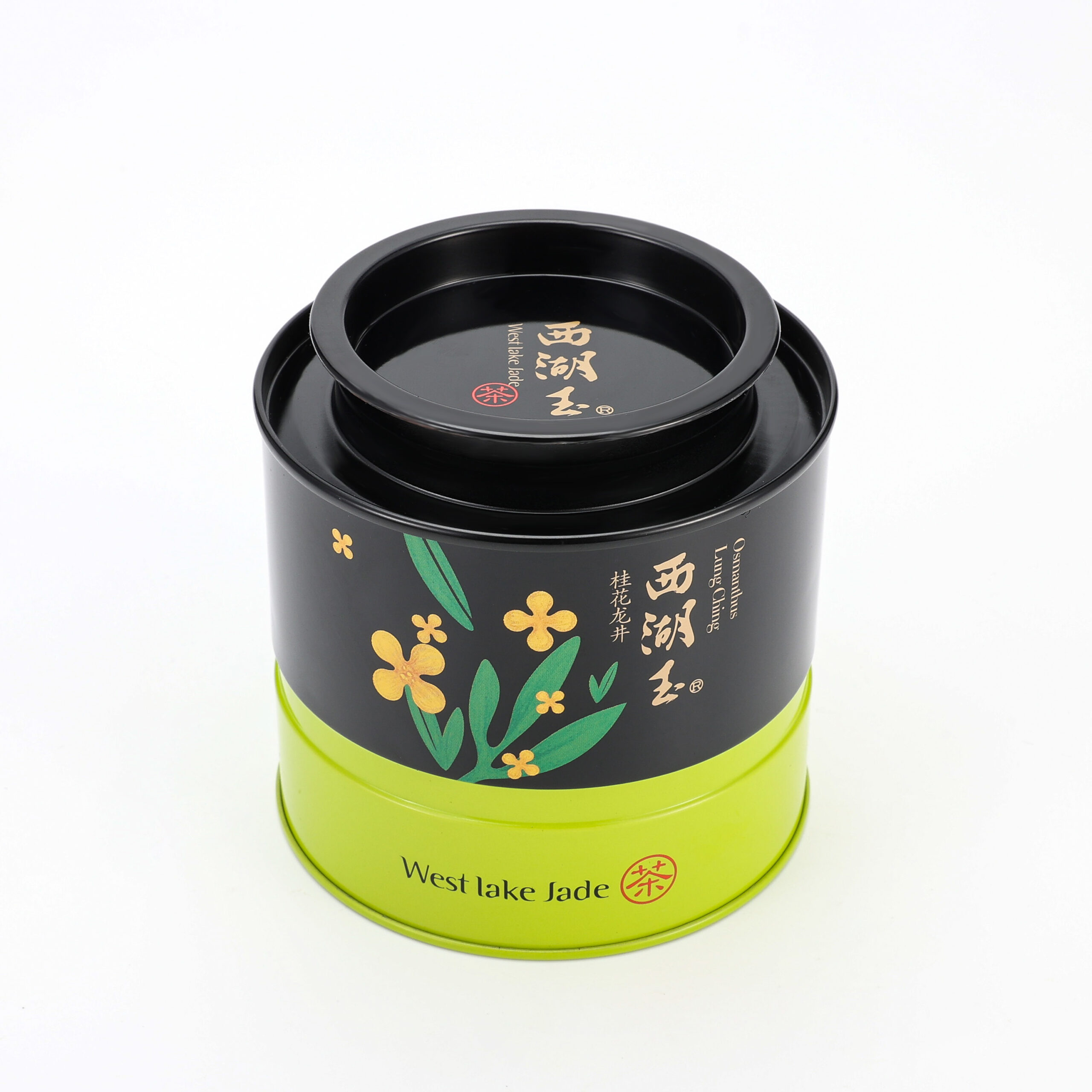
- Removable lid
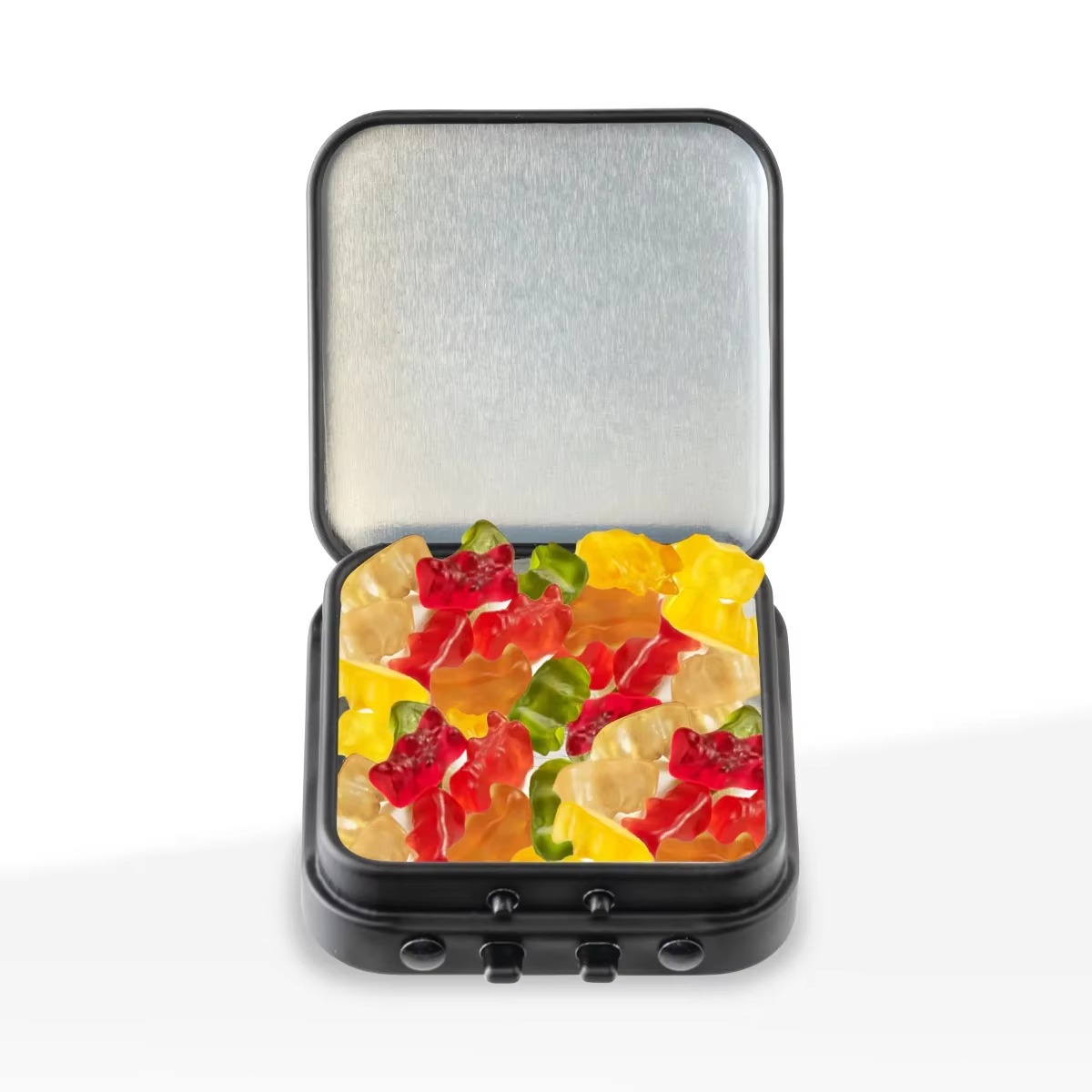
- Hinged lid
- Sliding or slip-cover structure
- Window lid
- Other customized structures
Liyipackaging’s website currently lists several tin structures, including hinged, sliding, double-lid, clip-lid and window-lid designs.
What should you check during sampling?
Do not evaluate the lid only when the tin is empty.
Put the actual candy inside and check:
- Product clearance
- Lid movement
- Closing behavior
- Ease of opening
- Product accessibility
- Artwork position
The lid, internal space and candy arrangement need to work as one system.
How Should You Customize the Candy Tin Artwork?
Finalize the basic structure before finalizing artwork. Tin artwork needs to account for edges, forming areas, seams and the actual lid structure.
What can be customized?
Depending on the project, customization may include:
- Logo
- CMYK artwork
- Pantone colors
- Matte or glossy finish
- Embossing
- Engraving
- Inner coating or lining
- Internal accessories
Liyipackaging’s published product information lists CMYK printing, Pantone matching, matte/gloss finishes, embossing, engraving and different inner accessories among its customization options.
What should you prepare before artwork production?
You can start the project before the final artwork is finished.
At the quotation stage, provide:
Tin shape + approximate size + candy dimensions + quantity + lid preference + artwork status
After the structure and sample are approved, the final artwork can be adapted to the actual production template.
What Food-Contact Requirements Should You Check?
Food-contact requirements should be discussed before production, not added after the tin has been developed.
Liyipackaging states on its public product and FAQ pages that its tinplate products can be produced with food-grade materials and that the inner surface can use food-grade lacquer to prevent direct contact between the tinplate and food.
However, “food grade” by itself does not identify the regulatory basis for every market and every use.
What should U.S. buyers confirm?
FDA explains that the regulatory status of a food-contact material depends on the individual substances used and their intended conditions of use. Applicable pathways can include regulations in Title 21 CFR, GRAS status, prior sanctions, exemptions or effective Food Contact Substance Notifications.
For a U.S. candy project, provide the manufacturer with:
- Intended market
- Type of candy
- Direct or indirect food contact
- Storage conditions
- Required compliance documentation
See the FDA guidance on determining the regulatory status of food-contact materials for the official framework.
What should EU buyers confirm?
For EU projects, Regulation (EC) No 1935/2004 provides the general framework for materials and articles intended to come into contact with food. Regulation (EC) No 2023/2006 addresses good manufacturing practice for food-contact materials and articles.
The official texts are available through EUR-Lex Regulation (EC) No 1935/2004 and EUR-Lex Regulation (EC) No 2023/2006.
The practical point is simple: tell the supplier the target market and intended use before the inner coating and related documentation are finalized.
Does a Candy Tin Need Moisture Protection?
A metal tin is not automatically an airtight or moisture-proof package. The required protection depends on the candy and the closure structure.
Hard candies, soft candies and chocolate-based confectionery can have different packaging requirements.
For a moisture-sensitive product, discuss:
- Inner coating
- Lid structure
- Closure performance
- Individual wrapping
- Inner tray or liner
- Storage conditions
Do not assume that adding a metal tin automatically solves moisture protection.
If moisture protection is important to shelf life, the finished packaging configuration should be evaluated under the intended conditions rather than relying on the material name alone.
What Affects the Cost of a Custom Candy Tin?
Size is only one part of the quotation. Material usage, tooling, printing, finishing, accessories and order quantity can all affect the final cost.
Liyipackaging’s public FAQ specifically identifies material thickness, size, shape, order quantity and printing colors as factors affecting pricing.
Other project-specific factors can include:
| Cost factor | Why it matters |
|---|---|
| Tin size | Larger structures generally require more material |
| Shape | Complex shapes may require additional tooling |
| New mold | Custom structures may require mold development |
| Printing | Artwork and color requirements affect production |
| Finish | Embossing or special finishes add processing |
| Insert | Trays or liners add material and assembly |
| Quantity | Larger production runs can change unit economics |
| Packaging | Export carton and protective packing affect logistics |
This is why a supplier cannot give a reliable custom-tin price from a product photo alone.
How Should You Compare a Candy Tin With Other Packaging?
The choice should depend on what the package needs to achieve.
| Requirement | Candy Tin | Paperboard Box | Plastic Container |
|---|---|---|---|
| Rigid structure | Strong | Moderate | Strong |
| Large printable surface | Yes | Yes | Depends on structure |
| Reusable package | Often | Usually limited | Often |
| Custom shapes | Available | Available | Available |
| Premium physical feel | Often strong | Depends on material/finish | Depends on material |
| Product visibility | Depends on lid | Usually limited | Often easier |
| Food-contact specification | Must be confirmed | Must be confirmed | Must be confirmed |
The point is not that one material is always better. A candy tin makes particular sense when the brand wants a rigid package with a substantial physical presence and a package that customers may keep after the candy is gone.
When Should You Start a Seasonal Candy Tin Project?
Work backward from the required delivery date rather than starting when the artwork is finished.
This matters especially for Christmas and other seasonal launches.
As of September 24, 2026, Liyipackaging’s published information gives these general planning references:
- Customized sample: approximately 5–15 days
- New mold development and sampling: approximately 20–25 days
- Custom printed tin production: approximately 25–30 days
- Customized MOQ: generally 3,000–10,000 pieces, depending on structure and printing complexity
These are published planning references, not guaranteed delivery commitments. The actual schedule depends on the project, quantity, artwork, mold and production capacity.
For a Christmas 2026 launch, September 24 is already close to the point where development should begin. If a new mold is required, the published mold and production reference periods alone can consume roughly 45–55 days, before allowing for artwork approval, revisions, inspection and international shipping.
A safer development sequence is:
Product Specification → Structure → Mold/Sample → Fit Check → Artwork Approval → Production → Inspection → Shipping
That timeline is more useful than simply asking, “How many days does production take?”
What Should You Include in a Candy Tin Quotation Request?
A good inquiry answers the manufacturer’s main structural questions before the quotation starts.
Use this checklist:
Candy Tin Inquiry Checklist
- Candy dimensions
- Candy photos or sample
- Quantity per tin
- Packing arrangement
- Preferred tin shape
- Preferred lid structure
- Artwork or logo
- Printing requirements
- Surface finish
- Inner coating or lining requirements
- Target sales market
- Estimated order quantity
- Required delivery date
Compare these two inquiries:
Too vague:
Please quote candy tin, 5,000 pcs.
Much more useful:
We need a custom tin for individually wrapped candy. Each candy is approximately 30 × 20 × 10 mm, and we plan to pack 20 pieces per tin. The candies will be arranged in a 4 × 5 layout with some clearance between pieces. We prefer a removable lid, full-color CMYK artwork, and an estimated quantity of 5,000 pieces. The product will be sold in the U.S. and is planned for a Christmas 2026 launch.
The second version gives the manufacturer enough information to start discussing the structure, compliance requirements and schedule.
How Should You Approve the Candy Tin Sample?
Use the actual candy whenever possible. A digital drawing can confirm appearance, but only a physical sample can show whether the product and package work together.
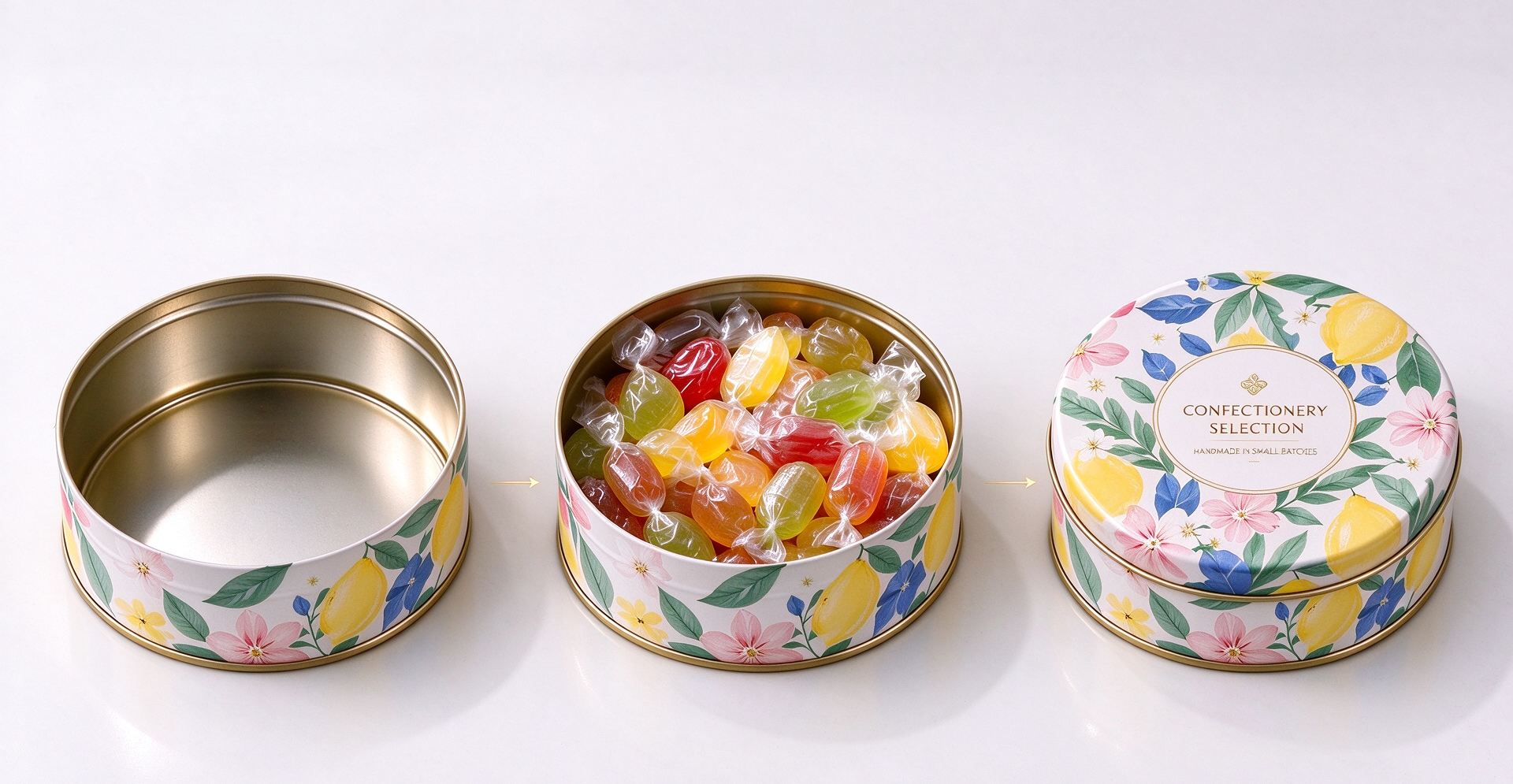
Check the sample in this order:
1. Product fit
Does the candy fit the intended quantity and arrangement?
2. Internal space
Is the product easy to place and remove without excessive movement?
3. Lid operation
Does the lid open and close correctly with the product inside?
4. Artwork
Are the logo, colors, artwork position and finish correct?
5. Finished appearance
Does the sample match the approved design from normal viewing distance?
The approval sequence can therefore remain simple:
Product Fit → Internal Space → Lid Operation → Artwork → Final Approval
How Can Liyipackaging Help With Custom Candy Tin Development?
The practical value of a manufacturer is not only making the metal box. The structure, tooling, artwork, sampling, production and inspection need to remain consistent throughout the project.
Liyipackaging states that it has more than 25 years of industry experience, a 3,000㎡ facility, and a reported monthly production capacity of 2 million units. Its public company information also describes a workflow covering design and development through production and pre-shipment quality control.
For a buyer, that can reduce the number of separate handoffs between structure development, sampling and production.
You can review Liyipackaging’s tin packaging manufacturing capabilities when evaluating the supplier’s production setup.
What Is the Practical Development Sequence for a Custom Candy Tin?
A custom candy tin project does not need to be complicated if the decisions are made in the right order.
1. Product
Confirm candy dimensions, quantity and arrangement.
2. Structure
Choose the basic shape, internal space and lid concept.
3. Sample
Develop a physical sample and test it with the actual candy.
4. Fit Check
Confirm internal space, lid operation and product presentation.
5. Artwork
Finalize the artwork against the approved production structure.
6. Production
Confirm the final specification, quantity, inspection and delivery schedule.
This sequence prevents one of the most expensive mistakes in custom packaging: spending time on finished artwork before discovering that the structure needs to change.
For a new project, the next practical step is to send your candy dimensions, quantity per tin, packing arrangement, preferred shape, lid preference, target market and estimated quantity to the manufacturer. If you already have these details ready,contact us about your custom candy tin project.
FAQ
How do I determine the right size for a custom candy tin?
Start with the actual candy dimensions, quantity and packing arrangement. The required internal space should be determined before the final external tin dimensions.
Can custom candy tins be made in different shapes?
Yes. Round, square, rectangular and irregular structures can all be considered. The final choice should account for product arrangement, artwork, lid operation and production requirements.
What information should I send when requesting a candy tin quote?
Send the candy dimensions, quantity per tin, packing arrangement, preferred shape, lid structure, artwork status, target market, estimated order quantity and required delivery date.
Are custom candy tins suitable for direct food contact?
They can be developed for food-packaging applications, but the applicable inner coating, materials and documentation need to be confirmed for the intended food, market and conditions of use. FDA’s official guidance explains that food-contact compliance depends on the substances used and their intended conditions of use.