Written by: Liyipackaging Packaging Team
Published: November 17, 2026
Last Updated: November 17, 2026
Quick takeaway: When tin containers with lids don’t work as expected, the lid is rarely the only cause. A lid that is too tight, too loose or will not close usually comes from a mismatch between the lid-to-body connection, the usable internal height and what actually goes inside the tin, including the product, insert and printed finish. Check all three on a filled sample before approving production.
Most buyers settle the lid type early in a project. Fit problems tend to appear later, when the first sample arrives with the real product inside, or after cartons have been shipped and handled.
This guide is organized by symptom. It explains what usually causes each problem, how to check the internal height, and how to test a sample so problems are found before mass production. If you are still choosing a lid structure, start with our rectangular tin lid types guide or the broader Rectangular Tins with Lids guide first.
Why Do Tin Container Lids Fit Badly?
A tin lid does not work on its own. Its fit depends on several things at once:
- The lid-to-body connection. Lid depth, how far the lid covers the body and the edge profile of both parts decide how snugly the two fit together.
- Usable internal height. The external height on a drawing is not the space available for the product, because the base construction and lid overlap take up room.
- What goes inside. The product, a liner, an insert or an inner bag all add height and can press against the underside of the lid.
- Surface and finish. Printing, varnish, embossing and edge treatment can change how the lid slides on and off.
- Handling. Carton packing, stacking and transport can press on rims and lids after the tin leaves the factory.
A blank, empty sample can pass a visual check and still behave differently once the product, insert and printed finish are added.
Which Lid Fit Problem Do You Have?
Start with the symptom. The table shows the most common causes and what to check on the sample.
| Symptom | Common causes | What to check |
|---|---|---|
| Lid is too tight or hard to remove | Very close fit between lid and body; slightly deformed rim; surface finish adding friction | Open and close the empty sample, then the filled one. If it is only tight when filled, look at internal height and the insert rather than the lid |
| Lid is too loose or slips off | Lid overlap too shallow for the lid and contents; rim out of shape; fit too generous | Close the tin and tilt it gently. Check that the lid sits evenly all the way around |
| Lid will not close fully | Product plus insert taller than the usable internal height; uneven product arrangement; insert not sitting flat | Re-measure stacking height. Check that the insert lies flat and the product is level |
| Lid bulges or lifts in transit | Contents pressing on the underside of the lid; overfilling; pressure from the outer carton | Check clearance under the lid. Pack the tin in its planned carton and handle it as it will be shipped |
| Hinged lid will not stay open or closes onto the product | Hinge position and opening angle conflicting with the internal arrangement or insert | Open the lid fully with the product in place and check access and angle |
| Lid scuffs the printing when opened | Tight contact at the rim; friction between printed surfaces | Open and close repeatedly, then inspect the rim and lid edge for marks |
How Do You Check Usable Internal Height?
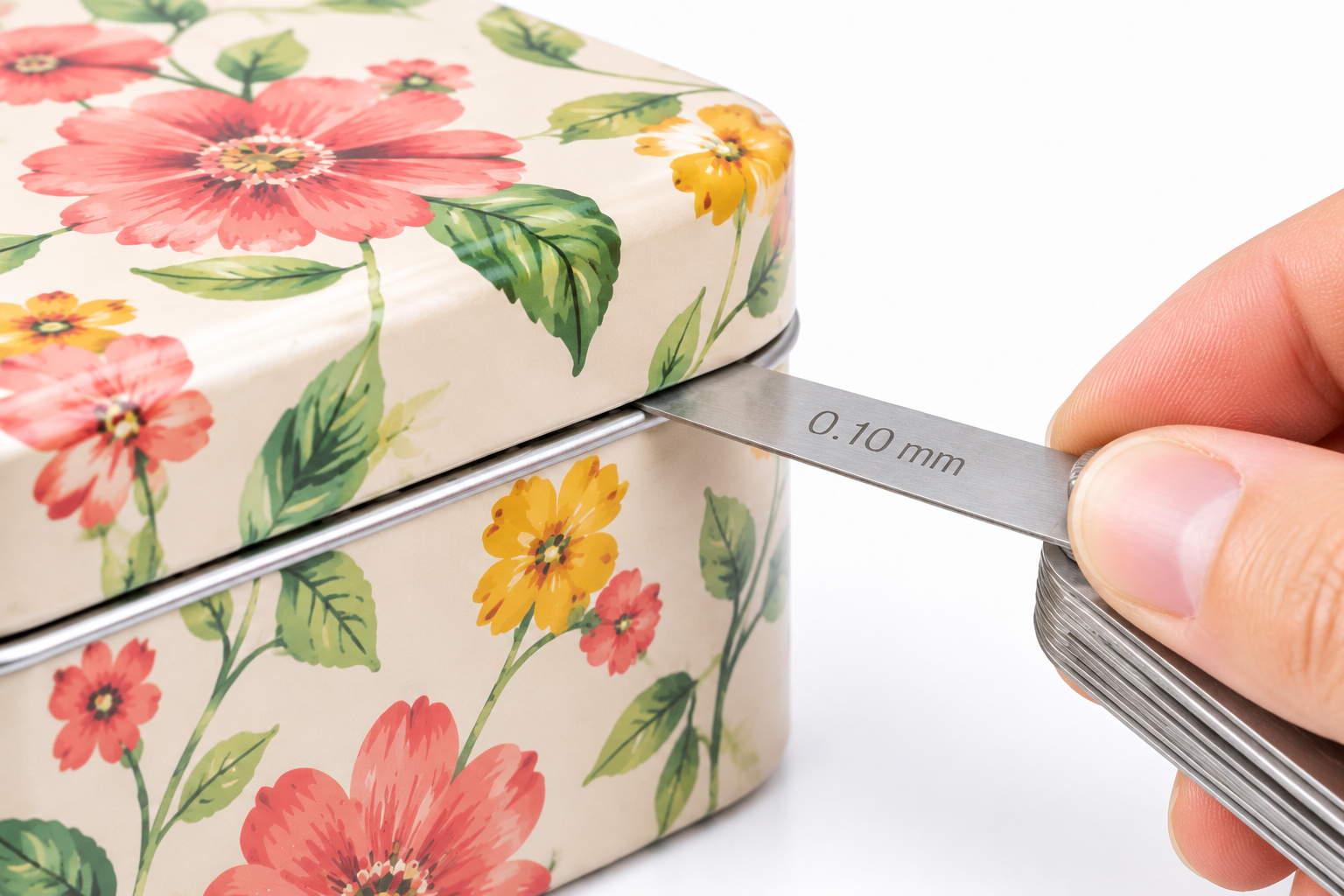
When a lid will not close, the first thing to check is usually the space available, not the lid itself.
Use this sequence:
Product height + insert or liner thickness + closing clearance = required internal height
The result must fit within the internal height measured with the lid seated, not the external height listed on a drawing.
Example calculation: if the product is 40 mm high and an insert under it adds 4 mm, the stack is already 44 mm before any closing clearance. The tin needs enough internal height to hold that stack and still allow the lid to seat. Two tins with similar external heights can offer different usable space because of base construction and lid overlap.
For loading layouts and how to size the internal footprint, see our rectangular tin box size guide.
How Should You Test Lid Fit on a Sample?
Treat the sample as a working test, not only a visual proof.
- Test the empty tin. Open and close it several times and note how the lid feels.
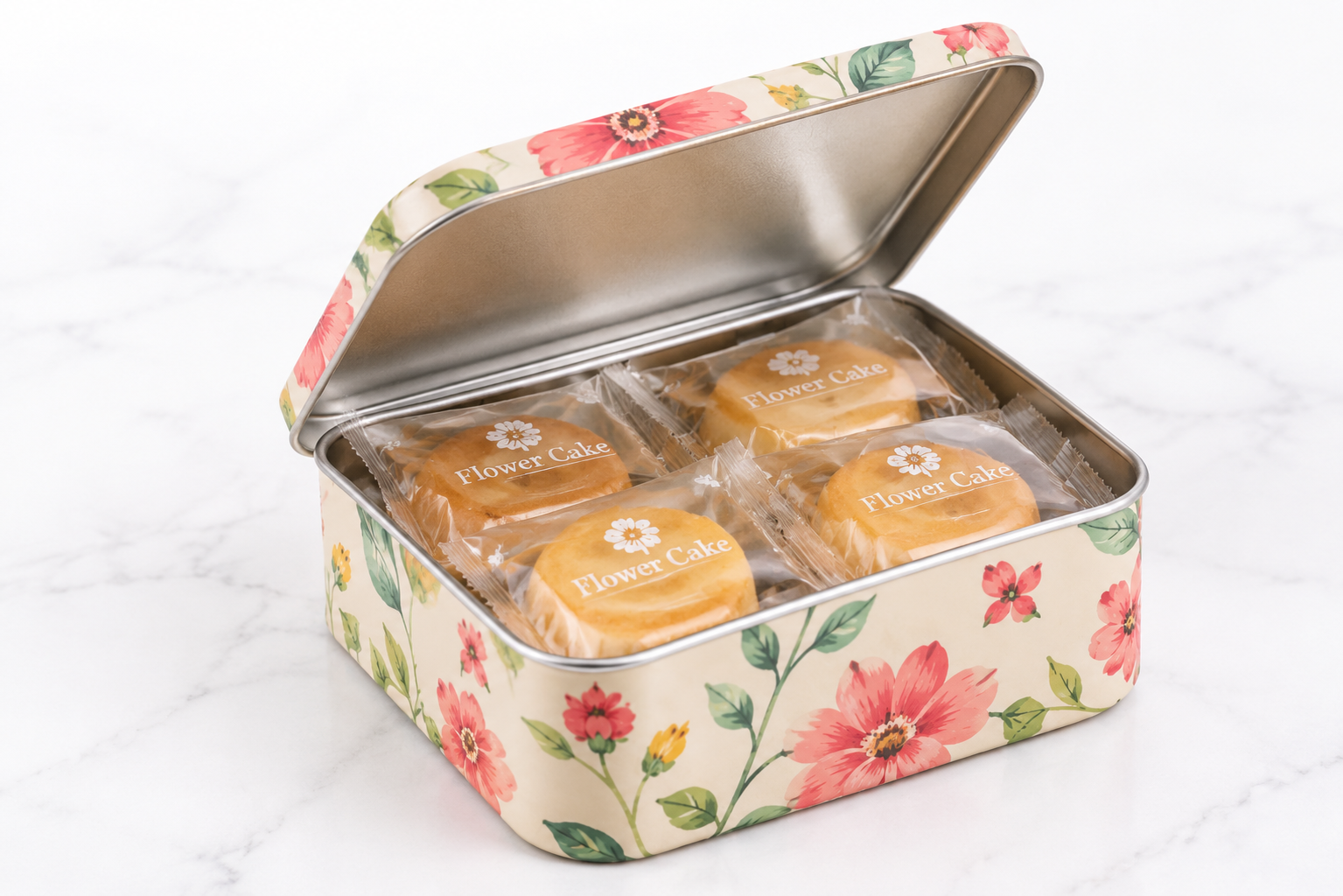
- Fill it with the real product and insert. Use the actual product or a representative mock-up, in the intended arrangement.
- Close the lid and check the gap all the way around. Look for uneven seating, a lifted corner or pressure from the contents.
- Test with the printed sample. A finished or printed lid can behave differently from a blank one.
- Repeat the open-and-close cycle many times. Daily-use products deserve a longer test than a gift tin that is opened once. Then inspect the rim and the printing.
- Pack and handle it like a shipment. Place the tin in its planned outer carton, move it around, then re-check the lid.
- Re-check after the sample has been filled for a while. Some products settle or shift, so look again after leaving it overnight.
Once the fit is approved, keep that sample as the physical reference for production. This gives buyer and manufacturer the same standard to refer back to. For the wider development sequence, see our custom tin packaging process guide.
For irregular shapes, the same checks apply with additional points to watch. Our irregular tin box sample approval guide covers them.
How Does the Lid Type Change the Problem?
The same fit issue shows up differently depending on the lid structure:
- Slip and removable lids: problems usually appear as a lid that is too tight, too loose or slow to seat, because the whole fit relies on the lid-to-body connection.
- Hinged lids: the issue is often how the lid opens, such as the opening angle, hinge position and whether an insert blocks it.
- Window lids: the lid has an added component, so check that the window does not interfere with the product or close unevenly.
Tins bought for reuse as storage containers are opened far more often than gift tins. For that kind of use, the repeated-opening test matters more. See our custom storage tins guide for how reuse affects the choice of size and lid.
Also remember that a tight lid is not automatically an airtight one. If moisture or aroma protection matters, discuss the closure and inner packaging with your manufacturer.
What Should You Send When a Lid Fit Needs Review?
If a sample does not fit as expected, send the manufacturer enough information to find the cause quickly:
- Photos of the problem with the lid open and closed
- Measured product dimensions and the insert or liner thickness
- Internal height measured under the lid
- The lid type and how customers will open it
- Whether the issue appears empty, filled or only after shipping
- How the tin will be packed, such as the outer carton arrangement
Changes to the insert, product arrangement or packing method are generally easier than changing the tin structure itself. That is why fit should be confirmed on the sample, before artwork is finalized and production begins. If the lid carries a printed design, see our custom printed tin packaging guide for how artwork and finishes fit into that timeline.
How Can Liyipackaging Help With Lid Fit on Custom Tins?
Dongguan Liyi Packaging Products Co., Ltd. is a tin packaging manufacturer with more than 25 years of industry experience and a 3,000㎡ facility. The company lists a monthly production capacity of 2 million units and a workflow that runs from design and development through production and pre-shipment quality control. It also states that samples are available before ordering.
For a custom project, that means lid fit can be reviewed on a physical sample, with the real product and insert, before production is committed. To learn more about the company and its production process, visit our About Us page.
When you request a quotation, include the product dimensions, quantity per tin, insert details, preferred lid type and estimated order quantity. For MOQ, sample and lead-time planning, see our custom tin box cost, MOQ and lead time guide and our FAQ.
Frequently Asked Questions About Tin Containers with Lids
1. Why is my tin container lid too tight?
Common causes include a very close lid-to-body fit, a slightly deformed rim or a finish that adds friction. Compare the empty and filled sample. If the lid is only tight when filled, the cause is more likely the internal height or the insert than the lid itself.
2. Can a lid fit problem be fixed after mass production?
It depends on the cause. Adjustments to the insert, product arrangement or packing method are generally easier than changes to the tin structure. This is why lid fit should be confirmed on a filled sample before production.
3. Does printing or finish affect lid fit?
It can affect how the surfaces feel and how the lid slides, so test the printed sample rather than relying on a blank one.
4. How many times should I test opening and closing a tin?
Repeat the cycle many times, and for daily-use products make it a longer test. After testing, check the rim for deformation and the printing for scuffs, and confirm that the lid still seats evenly.
5. Is a tight-fitting lid airtight?
Not automatically. Tightness alone does not make a tin airtight or moisture-proof. If sealing matters, discuss the complete closure and inner packaging with your manufacturer.
Request a Custom Tin Container with Lid
If you already have the product dimensions, insert details and a preferred lid type, send them to the Liyipackaging team so the lid fit can be reviewed on a sample before production.