Written by: Liyipackaging Packaging Team | Published: November 19, 2026 | Last Updated: November 19, 2026
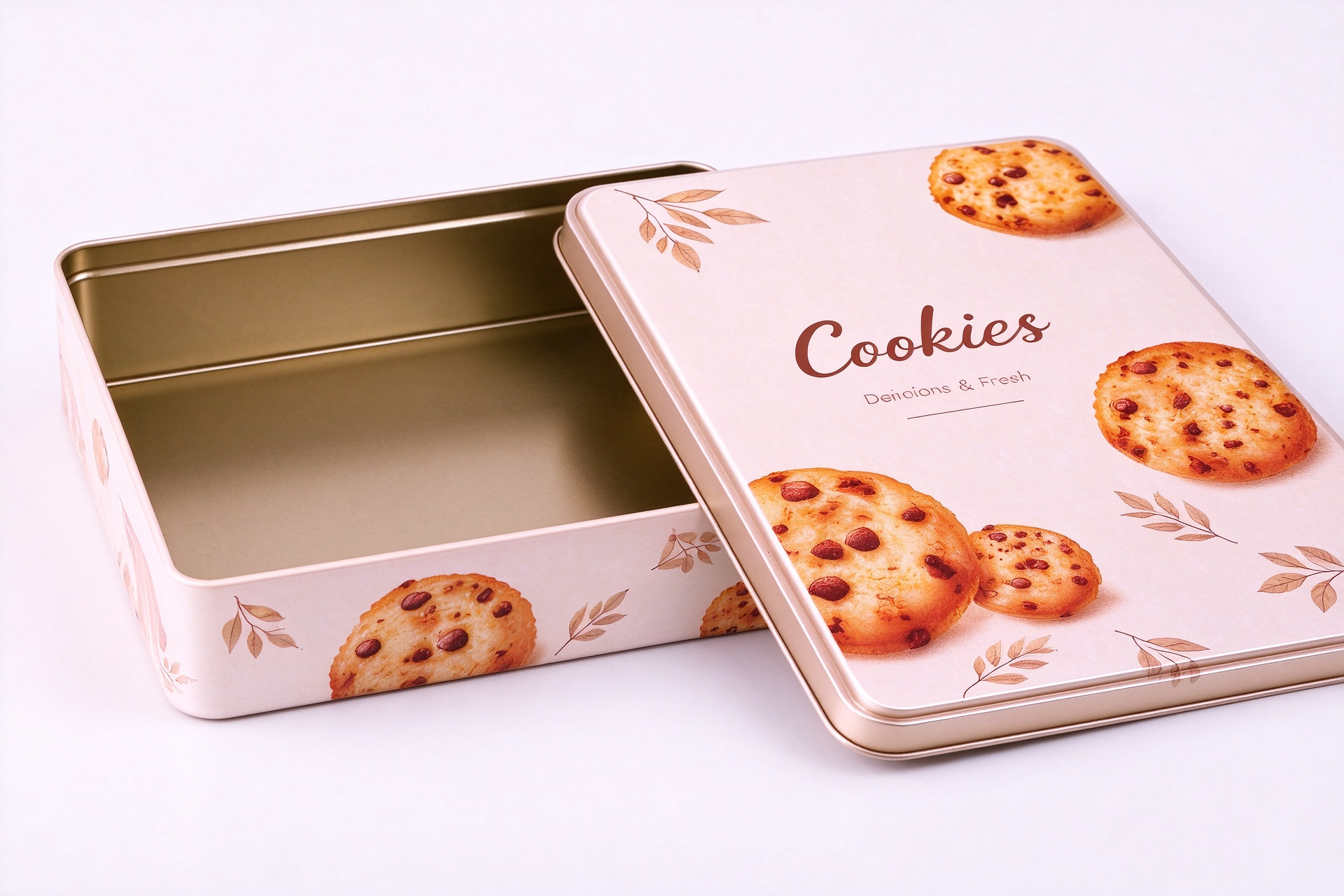
Quick takeaway: In this project, a rectangular tin for 24 individually wrapped cookies matched the cookie count on paper, but its initial internal height of 18 mm was too low once the wrapping, a layer separator and lid clearance were included. A filled physical sample showed the problem, and the internal height was corrected to 25 mm before mass production.
Project Snapshot
| Item | Detail |
|---|---|
| Product | Individually wrapped cookies |
| Packaging | Rectangular tin with lid |
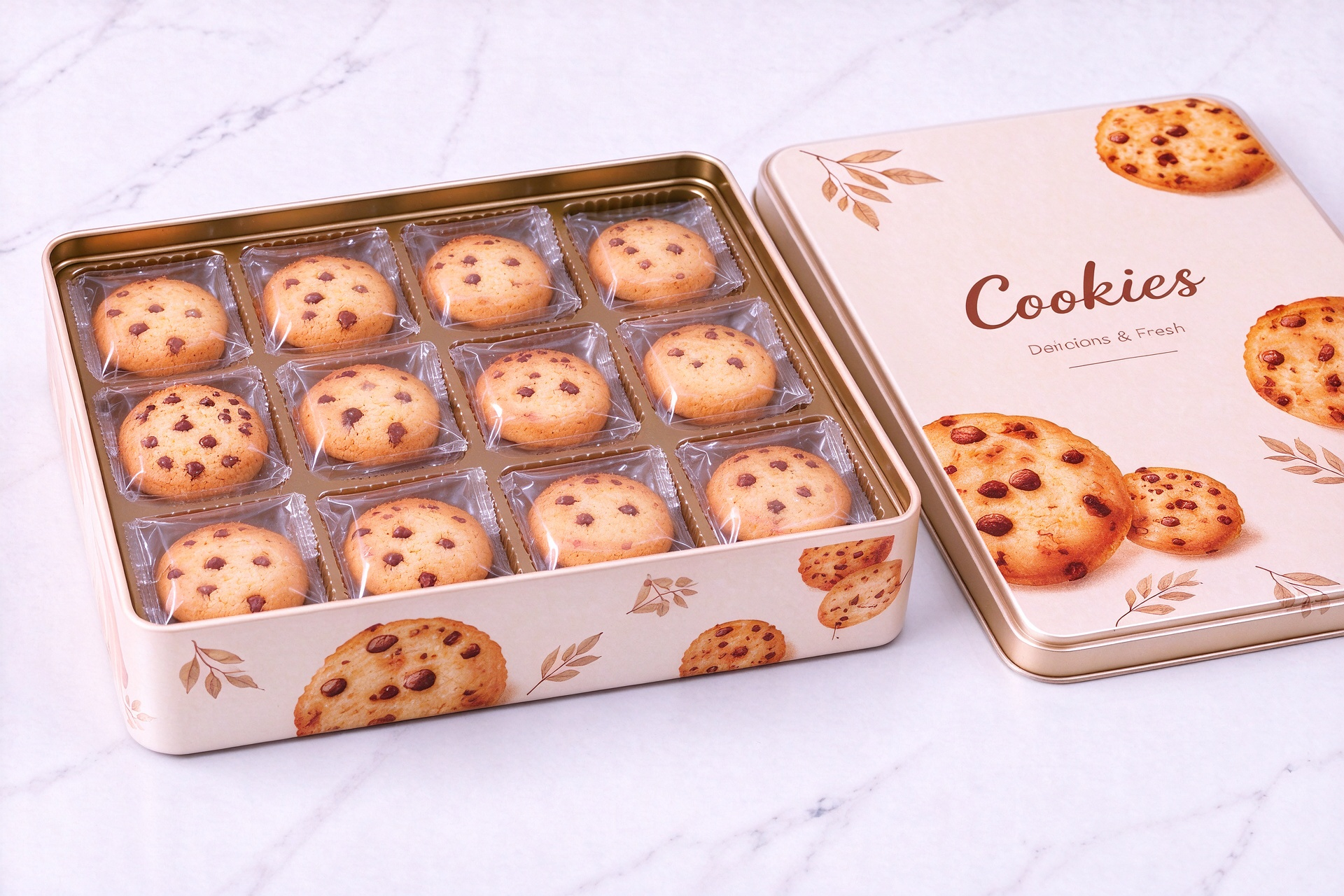
| Cookies per tin | 24 (2 layers of 12, arranged 4 × 3) |
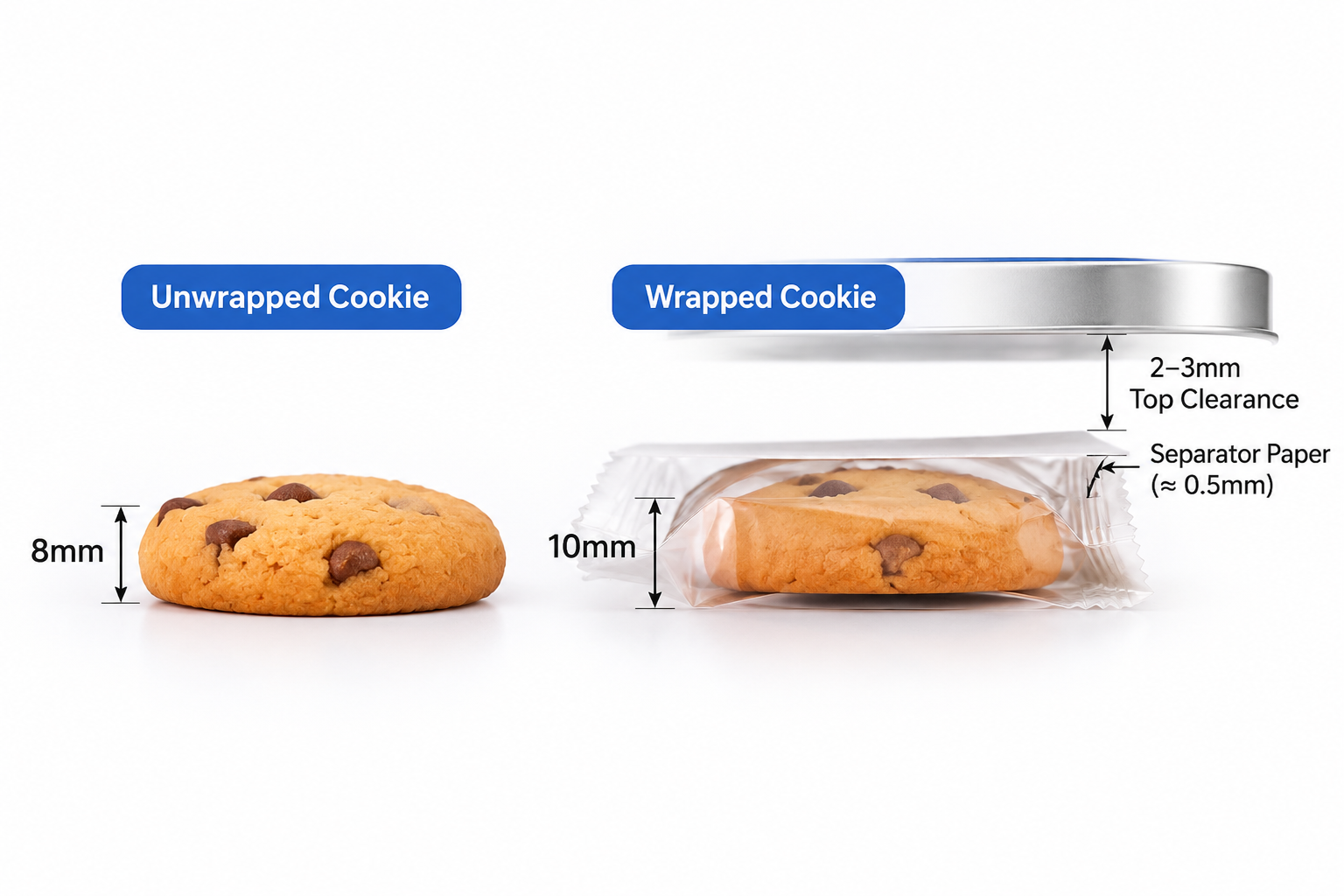
| Cookie thickness before wrapping | 8 mm |
| Wrapped cookie size | 55 × 55 × 10 mm, including the sealed film edge |
| Internal height in the initial specification | 18 mm |
| Internal height after sample review | 25 mm |
| Internal footprint | About 225 × 170 mm |
| Check used | Physical sample filled with the actual wrapped cookies |
What the Customer Needed
The brand wanted a rectangular tin that would hold 24 individually wrapped cookies in two layers and close properly with the lid. The first specification was built from the cookie count and the size of the cookies, which is a reasonable starting point for most projects.
Where the Problem Appeared
The internal height needed more attention than the initial specification suggested.
The first calculation used the unwrapped cookie thickness: two layers of 8 mm plus 2 mm of clearance gave an internal height of 18 mm. That left no room for what the real product adds:
| Height component | Initial calculation | Actual requirement |
|---|---|---|
| Two layers of cookies | 2 × 8 mm = 16 mm | 2 × 10 mm = 20 mm (wrapped thickness) |
| Layer separator | Not included | 1 mm |
| Lid clearance | 2 mm | 4 mm |
| Internal height | 18 mm | 25 mm |
The wrapping method and the arrangement both change how much usable space a tin needs, and the lid needs enough clearance to close without pressing on the top layer. None of this is visible when only the cookie dimensions and the outside size of the tin are compared.
How the Issue Was Resolved
The review followed four steps:
- Measured the wrapped cookies. The actual wrapped size, the wrapping method and the arrangement were reviewed, instead of relying on the outside dimensions of the tin.
- Adjusted the internal height. The specification was corrected from 18 mm to 25 mm to include the wrapped thickness, the separator and the lid clearance.
- Made a physical sample. The sample was filled with the actual cookies in their intended wrapping.
- Checked the closure. The lid had to close without pressing on the contents.
Once the sample was approved, its dimensions, artwork, material, finish and structure became the production reference. Keeping that approved specification also makes later repeat orders easier to manage.
What This Project Shows
- Internal dimensions decide the fit. The outside size of a tin says little about what it can hold. The method for working out usable space is explained in our rectangular tin box size guide.
- A filled sample finds what drawings miss. The height issue became clear when real products were placed in the sample. For another example of sample review, see our irregular tin box sample approval article.
- Corrections cost less before production. The full sequence from brief to shipment is covered in our custom tin packaging process guide. If you are still comparing suppliers, start with how to choose a cookie tin manufacturer. For budget and schedule planning, see the custom tin box cost, MOQ and lead time guide.
A Note on Food Contact
Because the cookies in this project were individually wrapped, the contact conditions between the food and the tin depend on the complete packaging design. For any food project, confirm the intended use with the manufacturer before production. The European Commission’s food contact materials page outlines the EU framework, and our food tin containers guide covers material, coating and documentation questions.
Planning a Similar Project
Send the following to start a review:
- Product sample or photographs, including the wrapping
- Wrapped product dimensions and quantity per tin
- Preferred tin shape or reference packaging
- Artwork status
- Estimated order quantity and destination market
For rectangular formats, you can view our rectangular tin box options, or contact Liyipackaging with your product details.
Frequently Asked Questions
Why did the internal height need attention if the tin matched the cookie count?
The cookie count does not include the space taken by the wrapping, the layer separator, or the clearance the lid needs to close. In this project those items added 7 mm to the 18 mm first calculated.
When should a sample be filled with the actual product?
Before the specification is approved for mass production. A sample that looks correct when empty can still have insufficient space once the product is added.
Does this apply to other rectangular tins?
Yes. Any rectangular tin for wrapped or layered products benefits from checking the usable internal space and lid clearance with the real product. See the rectangular cookie tin guide for application ideas.