By Liyipackaging Packaging Team | Published: November 4, 2026 | Last updated: November 4, 2026
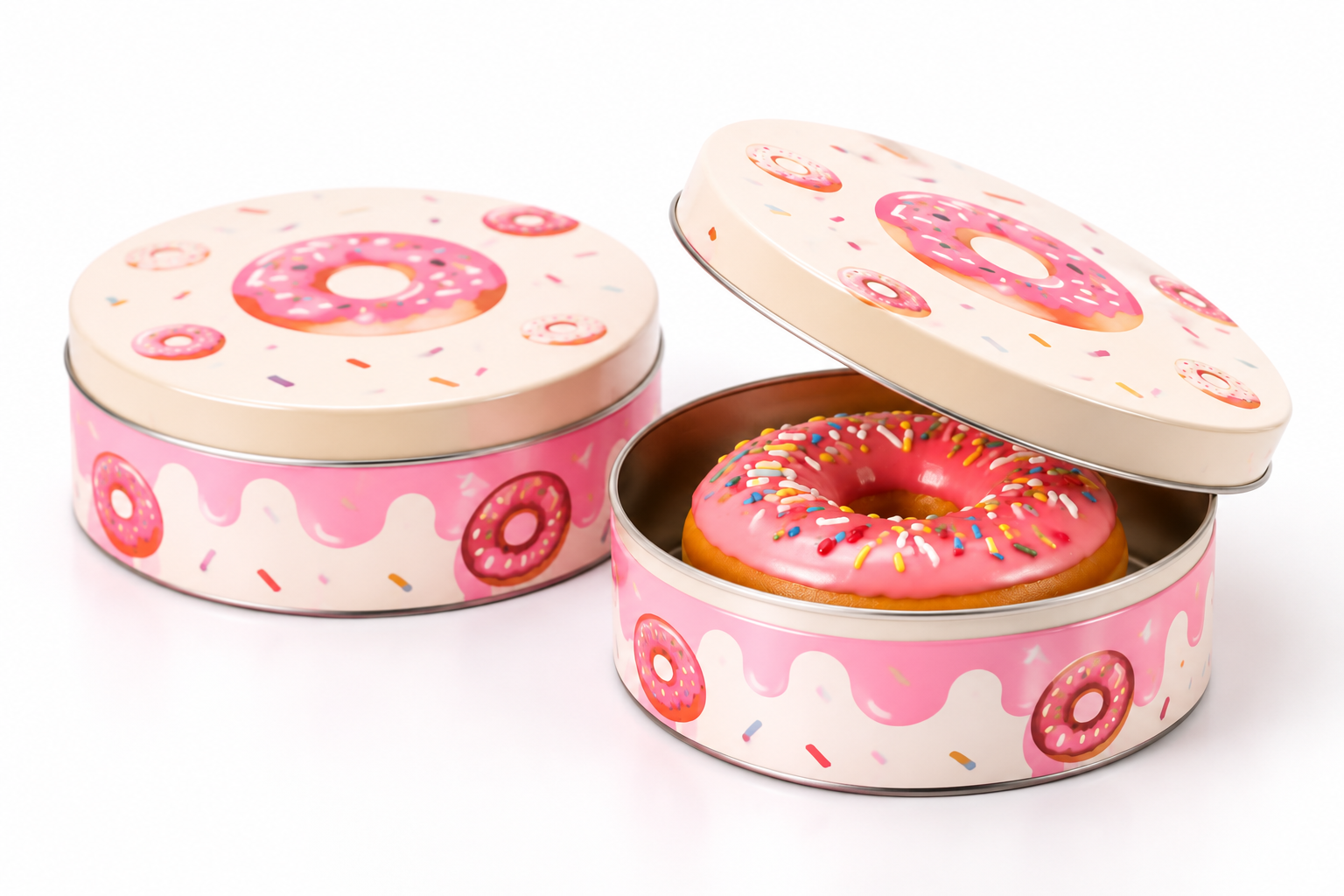
A donut is soft, round, and usually covered in something that smears: glaze, frosting, sugar, or sprinkles. That makes a custom donut tin a different packaging job from a cookie or candy tin. The tin has to fit the donut’s diameter, and it also has to clear the topping, resist grease, and keep the donuts from sliding into each other.
This guide covers the points that matter most for donuts: height and glaze clearance, grease and moisture, inserts, and the sample test to run before approving production. For general tin structure choices, see our custom tin packaging guide.
Quick Takeaway
- Measure the donut’s maximum height including topping, not just its diameter. Height decides lid clearance.
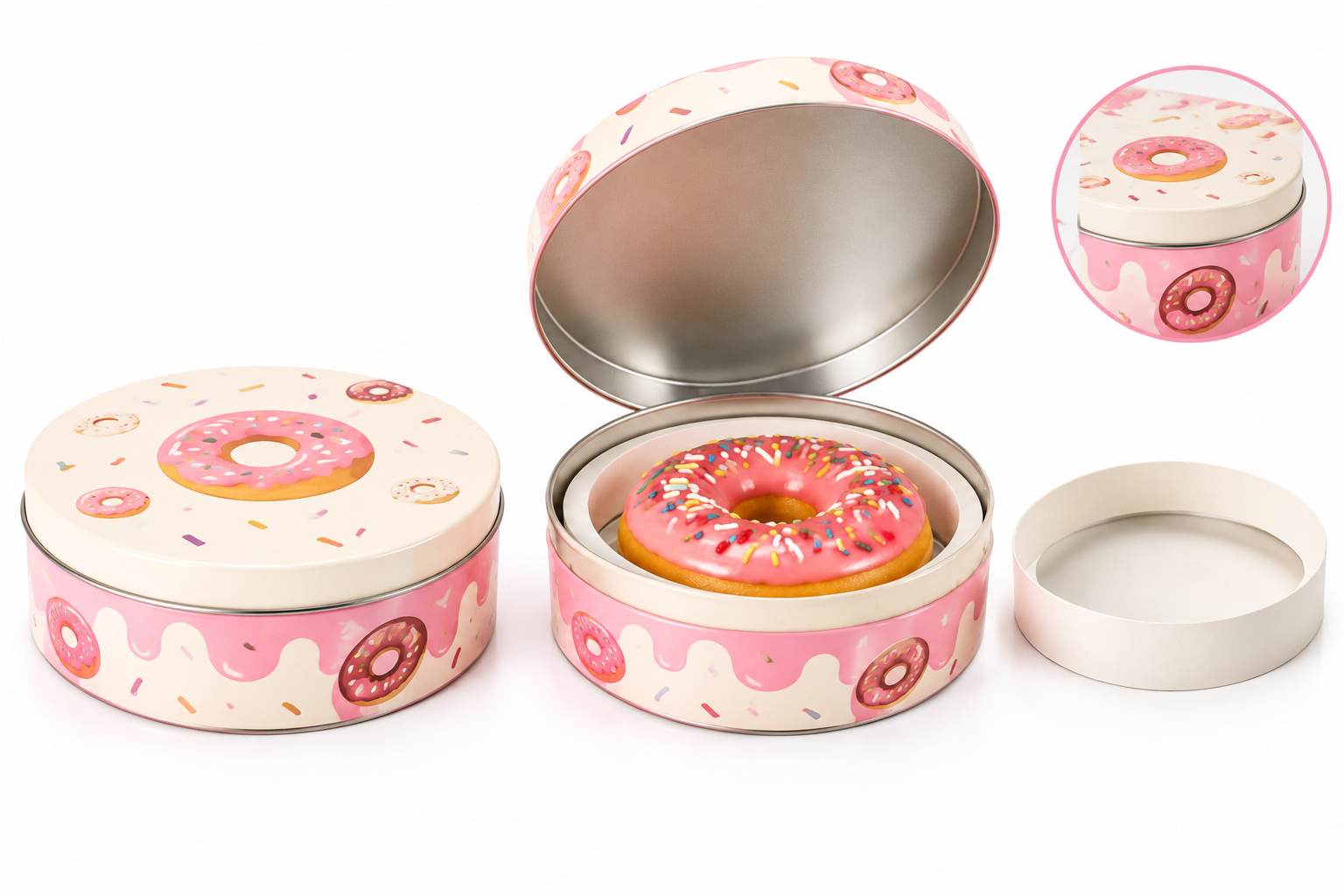
- Plan a clear gap between the topping and the underside of the lid. A lid that touches the glaze will smear it in transit.
- Fresh, oily, or filled donuts need a liner or inner wrap. Bare lacquered metal is not a substitute for food-grade inner packaging.
- Donuts that are still warm release steam, which condenses inside a closed tin. Cool them fully before packing.
- Confirm food-contact materials for the whole pack (coating, liner, insert) for your target market.
- Test with real donuts before approving a design or production run.
When Does a Donut Tin Make Sense?
A donut tin works best when the package is part of the product: limited-edition boxes, seasonal gift sets, corporate gifting, or a collection customers keep and reuse. For high-volume everyday donuts, disposable packaging is usually cheaper, and a tin is hard to justify on cost alone.
Tins also have limits. A metal tin is not a cold-chain solution, and it does not by itself keep donuts fresh. Cream-filled or refrigerated donuts need their own storage and handling plan before any tin is considered.
How Do You Size a Donut Tin?
Start with three measurements taken from real donuts:
- Diameter at the widest point.
- Maximum height, including glaze, frosting, sprinkles, or any decoration.
- Variation across a batch. Hand-finished donuts differ from piece to piece, so measure several and use the largest.
A Planning Example
Take four decorated ring donuts, each about 90 mm in diameter and 40 mm tall with toppings, in a 2 × 2 layout:
- Two donuts side by side take up 180 mm.
- Adding a small gap between donuts and a gap to each wall brings the internal footprint to roughly 195–200 mm in each direction.
- For height, add the donut with topping, the insert or liner thickness, and lid clearance. That points to an internal height in the range of 55–60 mm.
These numbers are a starting point for discussion only. Final dimensions should be confirmed with your actual donuts and a physical sample.
Layout Options by Quantity
| Quantity | Typical arrangement | Best for | Watch for |
|---|---|---|---|
| 1 | Single position | Individual gifts, premium presentation | Oversized tin for the product leaves too much movement |
| 2 | Side by side | Paired gifts, compact sets | Glaze contact if the gap is too small |
| 4 | 2 × 2 | Standard gift set | Footprint grows quickly with diameter |
| 6 | 3 × 2 | Larger gift boxes | Rectangular tin usually fits better than round |
| Mini donuts | Grid of small positions | Sampler boxes | Many small cavities; check insert cost and assembly |
For multi-piece sets, a rectangular tin usually fits rows of donuts more efficiently. Our guide to rectangular tin lid types explains how the lid style affects opening and clearance. For a single large donut or circular presentation, a round tin can work well. The packing logic is covered in our round cookie tin guide.
How Much Clearance Do Glaze and Toppings Need?
Glaze, chocolate coating, sprinkles, and drizzle are the most fragile part of a donut. Clearance problems usually show up in three places:
- Lid underside. Any contact with the topping will transfer or crack it. Measure the tallest decoration, then leave a visible gap.
- Tin walls. Donuts that touch the side wall pick up scuffs, and sprinkles collect along the edges.
- Neighboring donuts. Glazed surfaces that touch each other can stick together or mark each other.
Donuts with soft frosting, thick chocolate, or loose toppings usually need individual positions. Plain sugared or lightly glazed donuts can tolerate a simpler shared insert if the arrangement stays stable when the tin is moved.
How Do You Handle Grease, Sugar, and Moisture?
This is where donuts differ most from dry bakery products.
- Grease. Fried donuts release oil that can mark paperboard inserts and leave stains. Use a grease-resistant liner or wrap where the donut touches the insert.
- Sugar and glaze. Sugar sticks to surfaces over time, especially in warm or humid conditions. A liner or individual wrap keeps glaze off the tin and the insert.
- Steam and condensation. Warm donuts sealed in a closed tin release moisture that condenses on the inside of the lid and drips back onto the product. Let donuts cool completely before packing.
- Fillings. Jelly or cream fillings can leak and add moisture. Decide on inner wrapping and storage conditions first, then design the tin around them.
A tin that looks airtight is not automatically moisture-proof, and a sealed tin can trap moisture rather than protect against it. Treat the tin as the outer package and confirm the inner packaging separately.
Which Inserts Work for Donuts?
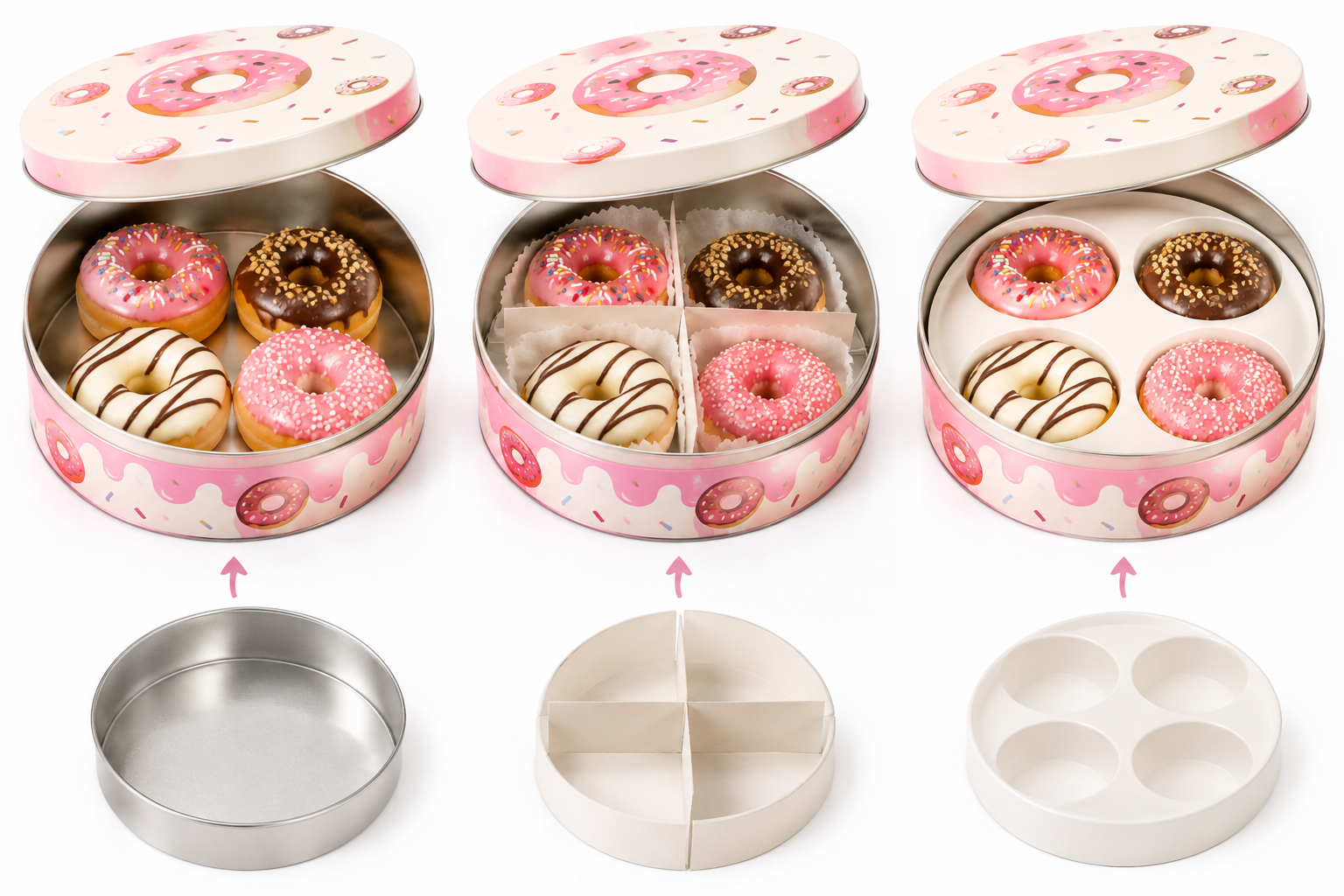
An insert holds each donut in position and keeps decorations from touching. Common options include:
- Paperboard dividers or trays with a grease-resistant liner, useful for organizing multiple donuts.
- Food-contact-suitable liners or wraps that keep glaze off metal and paperboard.
- Custom-shaped inserts cut around the actual donut diameter to limit movement.
The insert should hold the donut by its body and never press against frosting or sprinkles. Its height and opening size must be checked together with the tin’s internal dimensions.
What About Food Contact Requirements?
Food contact suitability covers the whole pack, not only the metal. The coating on the tin’s interior, any liner or insert, and printing inks that could contact the product all need to be considered.
Reference frameworks vary by market:
- United States: food-contact materials are regulated under the FDA’s framework for food-contact substances.
- European Union: Regulation (EC) No 1935/2004 sets general requirements, Regulation (EC) No 2023/2006 covers good manufacturing practice, and Regulation (EU) 2024/3190 addresses bisphenol A in food-contact materials, including coatings.
A tin used as an outer gift package for individually wrapped donuts has different requirements from a tin that holds unwrapped donuts. Confirm your intended use and destination market with your manufacturer and food producer before production. For a deeper look at materials and coatings, see our food tin container guide.
Regulatory information reviewed: November 3, 2026.
How Should You Plan Printing and Branding?
Finalize the tin structure before locking artwork, because a change in dimensions or lid style can force artwork changes. Matte backgrounds with metallic accents suit a premium bakery look; full-color glossy printing suits seasonal collections. Artwork file requirements, color, and finish options are covered in our custom printed tin packaging guide.
What Should You Test Before Approving Production?
Sample testing with real donuts catches most problems before they become expensive. Check:
- Whether the donuts fit with the insert and liner in place.
- Whether the lid closes without touching any topping.
- Whether donuts shift when the tin is tilted or shaken lightly.
- Whether grease or sugar marks the liner or insert after a realistic holding time.
- Whether condensation forms inside the lid when donuts are packed at your normal temperature.
- Whether the lid opens easily for the customer without disturbing the donuts.
Run the test with the same donut type, topping, and wrapping you plan to ship. A plain test donut will not show glaze problems.
What Information Should You Send for a Quote?
A clear specification speeds up quotation and sampling. A simple format looks like this:
| Item | Example |
|---|---|
| Product | Decorated ring donuts |
| Quantity per tin | 4 pieces |
| Donut diameter and max height | About 90 mm / about 40 mm with topping |
| Arrangement | 2 × 2 |
| Surface | Chocolate coating and sprinkles |
| Inner protection | Individual liner and four-position insert |
| Inner wrapping | Wrapped or unwrapped |
| Target market | United States or EU |
| Sales purpose | Seasonal gift collection |
Share product photos and, if possible, sample donuts or accurate measurements. Quantity requirements, tooling, and lead time depend on the tin structure and printing, so check the FAQ for current ordering terms.
Conclusion
A good donut tin is designed around the donut, including its topping height, grease, and movement in transit, rather than around the empty tin. Measure real donuts, plan generous lid clearance, add a suitable liner and insert, confirm food-contact materials for your market, and test with real product before approving production.
If you are preparing a project, send your donut dimensions, photos, quantity per tin, and design ideas through our contact page. You can also browse our rectangular and round tin product ranges, or see how the same planning approach applies to custom brownie tins.
Frequently Asked Questions
Are tin boxes suitable for packaging donuts?
Yes, for premium gifts, seasonal collections, and branded bakery packaging. The tin needs enough lid clearance for the topping, and fresh or oily donuts need a liner or inner wrap.
What size tin do I need for my donuts?
It depends on diameter, maximum height including topping, quantity, and arrangement. Add space for the insert, liner, and lid clearance, and confirm the final size with real donuts in a sample.
Can I pack warm donuts in a tin?
It is not recommended. Warm donuts release steam that condenses inside a closed tin and can make the glaze sticky or soggy. Cool donuts fully before packing.
Are donut tins safe for direct food contact?
They can be produced for food-contact use, but the interior coating, liner, insert, and printing materials must be confirmed for your intended use and destination market. Many buyers use individual wraps or liners so the donut does not touch the metal.
What are the MOQ and lead time for custom donut tins?
They depend on the tin structure, size, tooling needs, and printing. See our FAQ page for current ordering terms, then send your specification for a project-specific quotation.