Written by: Liyipackaging Packaging Team | Published: November 25, 2026 | Last Updated: November 25, 2026
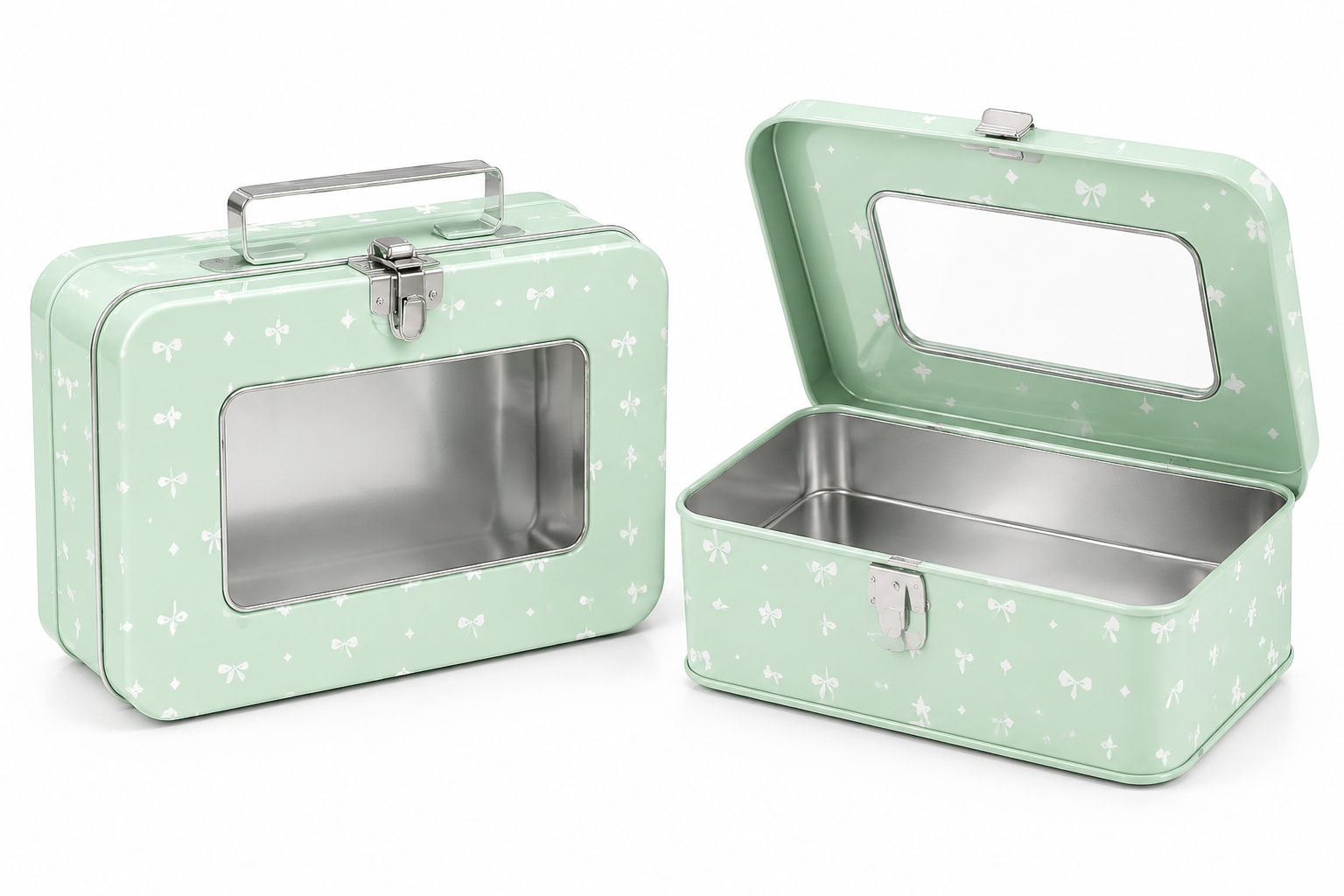
A tin box order can pass sample approval and still arrive with problems, because the sample was one piece and the order is thousands. Pre-shipment inspection is the last chance to compare the finished production lot with the approved sample and specification, while any problem can still be fixed at the factory.
This guide covers only that final stage: how samples are drawn from the lot, what to check on the tins and the cartons, what evidence to ask for, and what should happen if defects are found. For the full order sequence, see our custom tin packaging process guide.
Quick takeaway
- Inspect the finished lot against the approved sample and written specification, not against general impressions.
- Draw samples at random from across the whole lot, not from the top cartons.
- Agree the sampling plan and defect classes before production starts.
- Check the tins and the packing: quantity, carton marks and inner protection.
- Agree in advance which photos, videos or records you will receive before shipment.
- Treat any shipment decision as a documented release, not an assumption.
What Is a Pre-Shipment Inspection for Tin Boxes?
A pre-shipment inspection is a structured check of the finished and packed order before it is released for shipment. It does not reopen design decisions. Those were settled at sample approval. Its purpose is to confirm that the production lot matches what was approved.
In practice, this means checking three things against the same reference: the approved sample, the written specification, and the order requirements for quantity and packing.
When Should the Inspection Take Place?
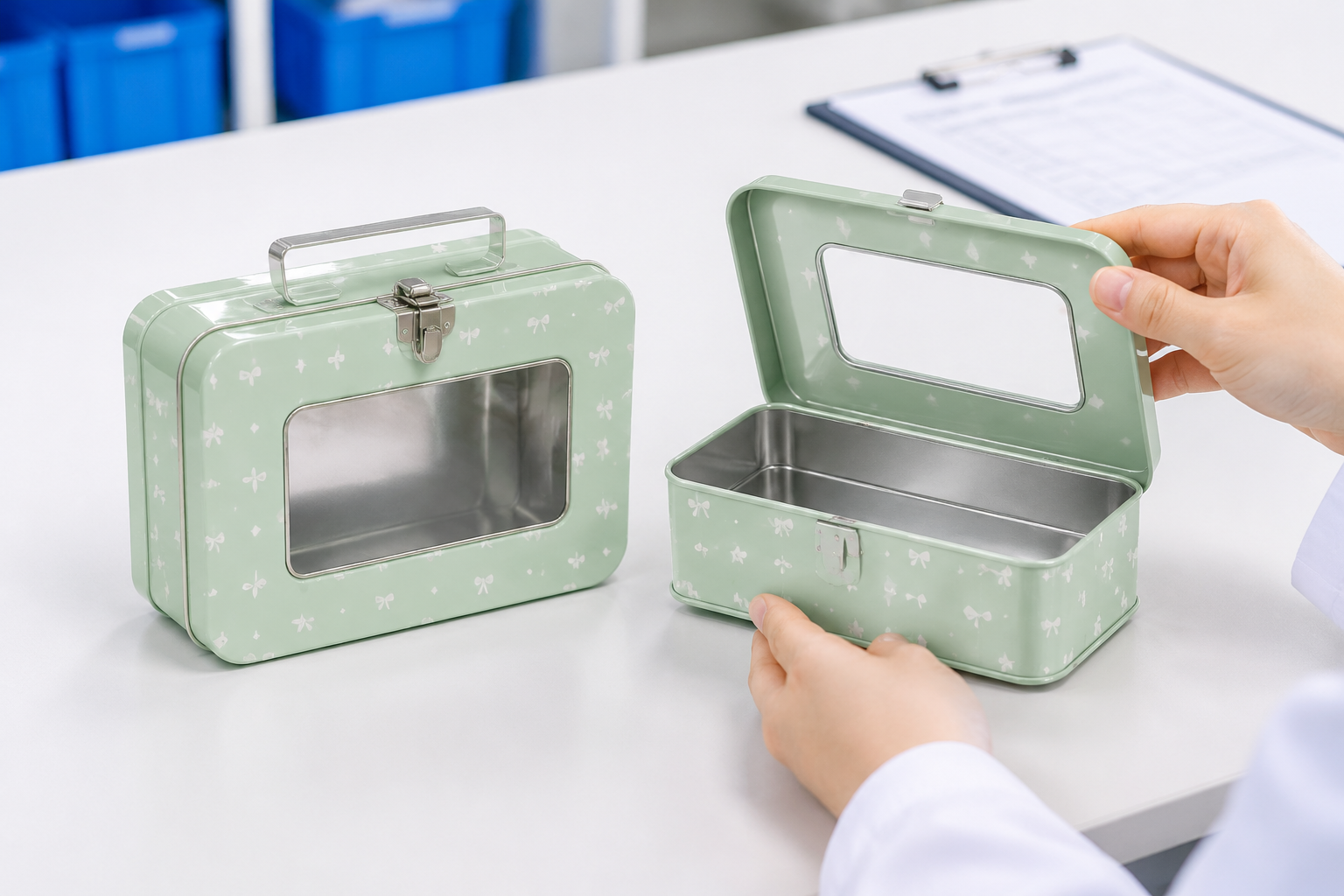
The inspection is most useful when production is complete and the cartons are packed, or nearly so. Inspecting too early leaves part of the lot unchecked. Inspecting after the goods have left the factory removes any chance to correct them.
Plan the inspection into the schedule. Custom printed tin boxes typically take about 25–30 days to produce, depending on quantity and the production schedule (see our FAQ). If a lot fails and needs sorting or rework, that time must come from somewhere. Ask how much of the schedule is reserved for final inspection and any correction before you fix a shipping date. Our cost, MOQ and lead time guide covers schedule planning in more detail.
How Are Samples Drawn From the Lot?
Inspecting every tin is rarely practical, so final inspection normally uses sampling. The key rules are simple:
- Open cartons from different positions in the lot, including the middle and bottom of pallets, not only the top.
- Take tins from different parts of each opened carton.
- Use the same approved sample and specification as the reference for every check.
Many buyers use a recognized sampling standard such as ISO 2859-1 (the basis of AQL inspection). The standard links lot size to sample size and defines how many defects are acceptable. As a reference example, for a lot of 5,000 tins, general inspection level II calls for a sample of 200 pieces. At AQL 2.5 for major defects, up to 10 defective pieces are acceptable and 11 means the lot fails. Check these figures against the current edition of the standard before using them in a contract.
| Defect class | What it means for a tin box | Typical examples |
|---|---|---|
| Critical | Safety or food-contact risk | Sharp exposed edges, exposed metal in a product-contact area, flaking inner coating |
| Major | The tin cannot be used as intended or clearly differs from the sample | Lid will not close or is far too loose, visible deformation, wrong internal dimension, clear print mismatch |
| Minor | Small cosmetic variation that does not affect use | Light surface mark not visible at normal viewing distance |
The sampling standard, AQL level and defect classes should be agreed with the supplier in writing before production, not negotiated after the lot has been made. If you need a specific AQL level, state it in your inquiry.
What Should Be Checked on the Tins?
Check the finished tin against the specification line by line.
| Check | What to confirm |
|---|---|
| Appearance | Scratches, dents, stains, deformation and visible surface defects |
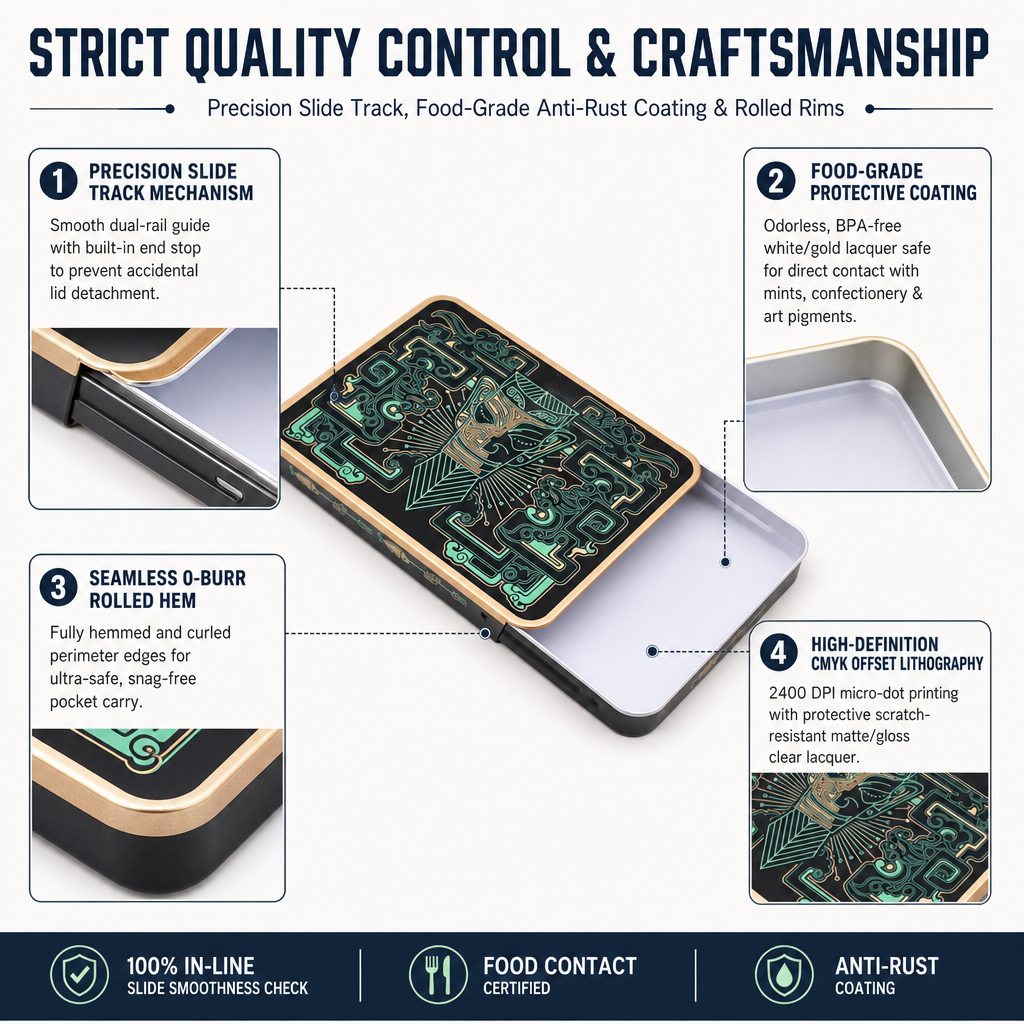
| Edges and seams | Smooth rolled edges, no sharp points, seams closed and even |
| Dimensions | External size and internal height or diameter match the specification |
| Lid operation | Opens and closes consistently, aligns around the rim, neither loose nor forced |
| Print and finish | Artwork position, colors and finish match the approved sample |
| Inner surface | Complete coating coverage and no exposed metal where the product will sit |
| Product fit | If you supplied the product, it sits as planned and does not press on the lid |
Measure internal dimensions rather than relying on external size, because that is what decides whether the product fits. Our cookie tin case study shows how a small internal height difference can change fit. For lid problems and how they arise, see lid fit problems and how to prevent them. Print requirements are covered in our printed tin packaging guide.
What Should Be Checked on the Cartons and Packing?
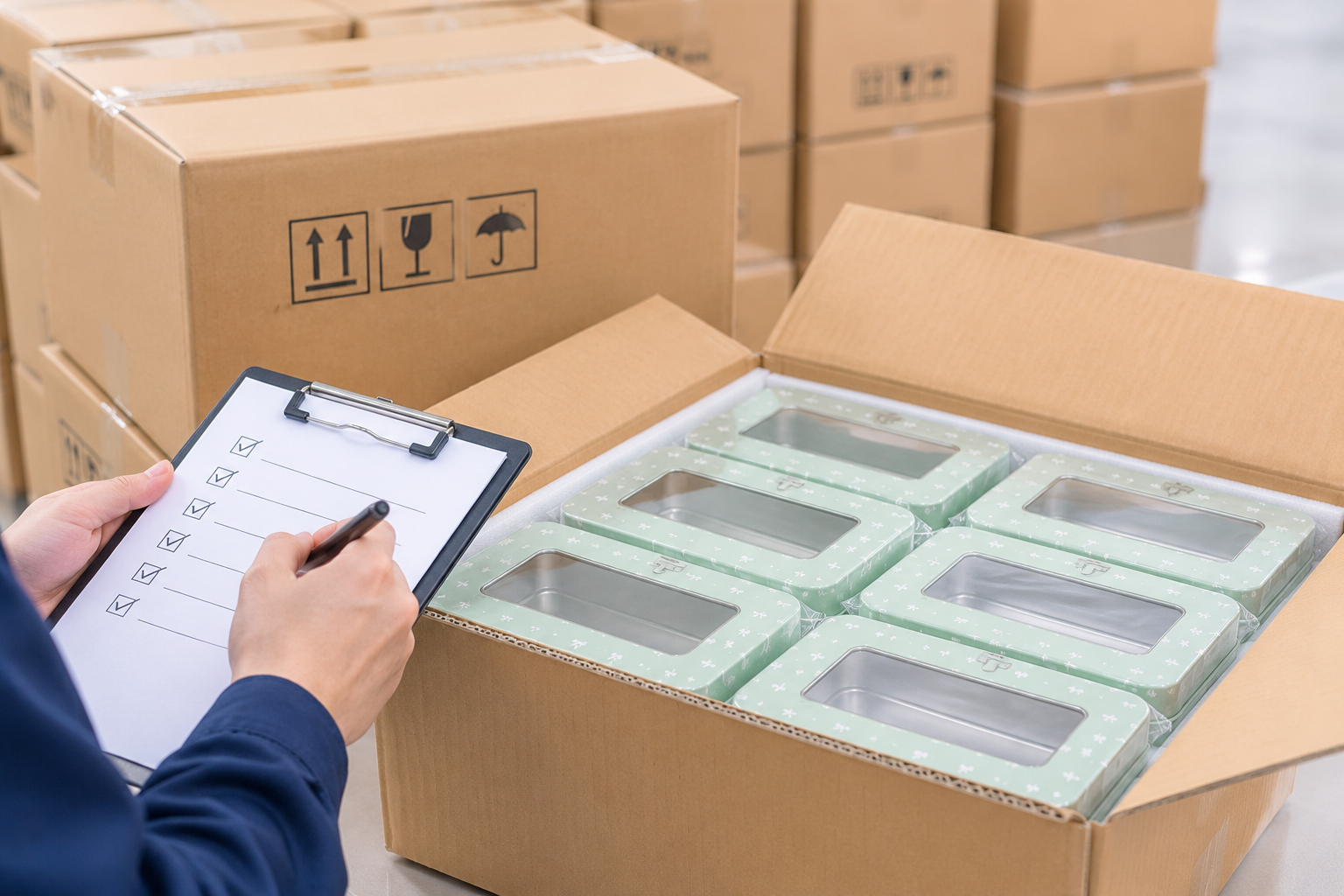
A tin can pass every check and still arrive damaged if the packing is wrong. At pre-shipment stage, also check:
- Quantity: Pieces per carton and total cartons match the order and packing list.
- Labeling: Carton marks, product references and shipping marks match your instructions.
- Inner protection: Tins are separated or protected so they do not rub or dent in transit.
- Carton condition: Cartons are intact, properly closed and strong enough for the shipping method.
- Mixed items: Different artwork versions or sizes are kept apart and clearly marked.
What Inspection Evidence Should You Ask For?
Rather than asking only whether the factory inspected the order, agree what you will receive. Depending on the supplier and the project, useful evidence includes:
| Evidence | What it shows |
|---|---|
| Photos of opened cartons | How the tins are packed and protected |
| Close-ups of the tin, lid and printing | Appearance and finish compared with the approved sample |
| Short video of lid opening and closing | Real lid operation, which photos cannot show |
| Measurement photos | Internal and external dimensions against the specification |
| Carton and shipping mark photos | Labeling matches your instructions |
| Defect count and decision | How many defects were found and what was done about them |
Agree this list when the specification is confirmed, so that both sides know the release criteria from the start. Buyers who use an independent inspector should share the specification and approved sample with them and arrange the inspection date with the factory in advance.
What Happens if the Inspection Finds Defects?
A defect found before shipment is far cheaper to fix than one found by your customer. The response should follow a clear sequence:
- Classify the defect as critical, major or minor against the agreed definitions.
- Separate the affected cartons so nothing questionable is shipped by mistake.
- Establish the extent by checking whether the problem affects a few pieces or the whole lot.
- Decide the remedy: sort out the defective pieces, rework them, or replace them.
- Reinspect the corrected goods against the same standard.
- Record the result and release the shipment only after it passes.
How Does Liyipackaging Handle Pre-Shipment Checks?
Liyipackaging is a manufacturer with its own factory in Qingxi Town, Dongguan, near Shenzhen. Our QC approach runs from raw materials to pre-shipment inspection, with a technical and QC team supporting production, and we coordinate specification, sampling, production communication and pre-shipment confirmation in one workflow. We have more than 25 years of industry experience, a 3,000㎡ facility and monthly production capacity of up to 2 million units, and we export to over 30 countries.
If you want to see the goods yourself, we welcome visits to the factory. You can read more on our About Us page. For a food product, confirm coating and food-contact documentation at the start of the project. The details are in our food tin containers guide.
Pre-Shipment Inspection Checklist
Use this list before approving a shipment:
- The approved sample and written specification are available as the reference.
- The sampling plan, AQL level and defect classes were agreed before production.
- Samples were drawn from across the whole lot.
- Appearance, edges, dimensions and lid operation were checked.
- Print and finish were compared with the approved sample.
- Inner surfaces were checked where the product will sit.
- Quantity, carton marks and inner protection match the order.
- Photos, video or records were received as agreed.
- Any defects were classified, corrected and reinspected before release.
Frequently Asked Questions
What is a pre-shipment inspection for tin boxes?
It is a check of the finished and packed order before shipment. The production lot is compared with the approved sample, the written specification and the order requirements for quantity and packing.
When should a tin box inspection be done?
When production is complete and the cartons are packed, or close to it. This leaves time to correct problems before the shipping date.
What is AQL and do I need to specify it?
AQL (acceptable quality limit) is a sampling method that defines how many defective pieces a lot may contain and still pass. If you want a specific level, state it in your inquiry so it can be agreed before production starts.
What should I check on a finished tin box?
Appearance, edges and seams, dimensions, lid operation, print against the approved sample, the inner surface and, where possible, fit with your actual product.
Where can I find MOQ and lead time information?
MOQ and lead time depend on structure, quantity and printing, and are covered in our cost, MOQ and lead time guide and on the FAQ page.
Planning a custom tin packaging project?
Share your product details, estimated quantity and packaging requirements with Liyipackaging, and tell us what inspection records you need. Contact our team to discuss the next steps from sample confirmation to shipment.
Related Guides
- Custom Tin Packaging Process: the five stages from brief to shipment.
- Tin Containers with Lids: Lid Fit Problems: causes and prevention.
- Cookie Tin Case Study: a real internal-height fix before mass production.
- Custom Tin Box Cost, MOQ & Lead Time: quotation and schedule planning.